Empowered Budgeting Toolkit: Monthly Budget & Wealth System

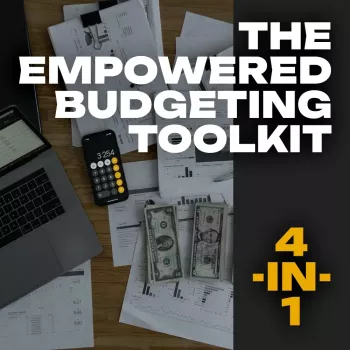
The Empowered Budgeting Toolkit: A 4-in-1 System for Monthly Spending, Saving, and Wealth Habits
The Empowered Budgeting Toolkit is a 4-in-1 bundle designed to turn budgeting into a repeatable, confidence-building routine. It combines a budget planner, an Excel guide, monthly expense and savings tools, wealth-building strategies, and guided affirmations that support consistent money habits. This structure helps track cash flow, plan ahead, and stay motivated—without relying on guesswork.
What’s Included in the 4-in-1 Bundle
Instead of bouncing between notes, apps, and half-finished spreadsheets, this toolkit organizes the entire month into one system—from planning, to tracking, to adjusting, to reviewing.
- Budget planner for organizing income, bills, variable spending, and goals in one place
- Excel guide for faster calculations, clear categories, and flexible monthly views
- Monthly expense + savings framework to identify leaks, set targets, and measure progress
- Wealth strategies to move beyond tracking into intentional planning and prioritization
- Guided affirmations for wealth to reinforce consistency, reduce avoidance, and support follow-through
Toolkit Components and How They’re Used
| Component | Best for | Outcome to expect |
|---|---|---|
| Budget Planner | Mapping bills, variable expenses, and financial goals | A clear monthly plan that reduces surprises |
| Excel Guide | Automating totals, category rollups, and month-to-month comparison | Faster decisions with fewer manual errors |
| Monthly Expense & Savings Tools | Spotting spending patterns and setting savings targets | More control over cash flow and steady progress |
| Wealth Strategies + Guided Affirmations | Staying consistent and aligning behavior with long-term goals | Stronger habits and a more intentional money mindset |
If you want everything bundled in one place, start with The Empowered Budgeting Toolkit (4-in-1 Bundle).
Who This Toolkit Fits Best
- Anyone who wants a structured monthly routine instead of starting over each month
- Budgeters who prefer both a planner-style overview and an Excel-based system
- People working on savings goals (emergency fund, debt payoff, sinking funds, big purchases)
- Those who feel motivated at first but struggle with consistency or avoidance
- Households that need a simple, repeatable way to track shared expenses and priorities
A Simple Monthly Workflow Using the Toolkit
The fastest way to make budgeting feel doable is to use the same checkpoints each month. Think of it like a short rhythm you can repeat, even when life gets busy.
- Set the month’s baseline: income estimates, fixed bills, due dates, and non-negotiables.
- Assign category targets: groceries, transportation, personal spending, and variable bills.
- Track weekly: record spending and compare to category limits before it drifts.
- Mid-month adjustment: rebalance categories to protect savings goals and essentials.
- Month-end review: identify the top 2–3 drivers of overspending and set one change for next month.
- Use the affirmations as an anchor: a daily/weekly cue that lowers stress and keeps momentum.
For foundational guidance on building a budget and sticking to it, the Consumer Financial Protection Bureau’s budgeting resources are a helpful reference point.
Monthly Expense Tracking That Actually Changes Outcomes
Tracking works best when it leads to decisions. The goal isn’t perfect logging—it’s catching patterns early enough to redirect them.
- Separate fixed vs. variable spending so it’s obvious what can realistically change this month.
- Use clear categories that match real life (including irregular costs like annual fees and gifts).
- Add a “true expenses” or sinking-fund line to prevent predictable surprises.
- Monitor the gap between planned and actual to improve accuracy month over month.
- Pick one focus metric per month (dining out, subscriptions, impulse buys) to avoid overwhelm.
When you need a simple structure to learn and refresh money basics, the FDIC Money Smart financial wellness materials can complement your monthly routine.
Savings and Wealth Habits Built Into the Plan
Saving doesn’t have to be an all-or-nothing decision. A sustainable plan uses small, realistic baselines and builds up as your confidence (and cash flow accuracy) improves.
- Start with a minimum baseline that you can keep even in a “messy” month, then scale gradually.
- Use milestone goals (first $500, first $1,000, one-month buffer) to keep progress tangible.
- Prioritize with intention: essentials → high-interest debt → emergency fund → long-term goals.
- Create separate lines for short-term wins and long-term wealth building to avoid “all-or-nothing” thinking.
- Review monthly and adjust targets instead of abandoning the plan after one setback.
For emergency savings benchmarks and practical framing, see FINRA’s overview on emergency fund guidance.
Guided Affirmations for Wealth as a Consistency Tool
For many people, the hardest part of money management isn’t math—it’s avoidance. Guided affirmations support follow-through by reducing shame, lowering friction, and strengthening the identity behind the habit.
If you want extra support building a calm, consistent check-in practice, Mindful Clarity: Journal & Prompts pairs well with a weekly money reset—especially when motivation runs hot and cold.
Common Setup Mistakes (and Quick Fixes)
FAQ
Is this better for beginners or experienced budgeters?
It works for both: the planner gives beginners a clear structure to follow, while the Excel guide helps experienced budgeters automate totals and compare months quickly. Start with a simple category list and add detail only after you’ve completed one full month.
Do I need Excel experience to use the Excel guide?
Basic spreadsheet comfort is enough—enter numbers in the right places and let built-in totals do the heavy lifting. A short weekly routine (10 minutes to update and glance at category limits) is usually all it takes to stay current.
How do affirmations fit into budgeting without feeling unrealistic?
They’re most effective as habit support, not magic: pair a grounded statement with a concrete next step like reconciling one category or scheduling a transfer. Used consistently, they reduce avoidance and make money check-ins feel safer and more routine.











Leave a comment