Mindful Clarity: 10-Minute Printable Journal for Calm
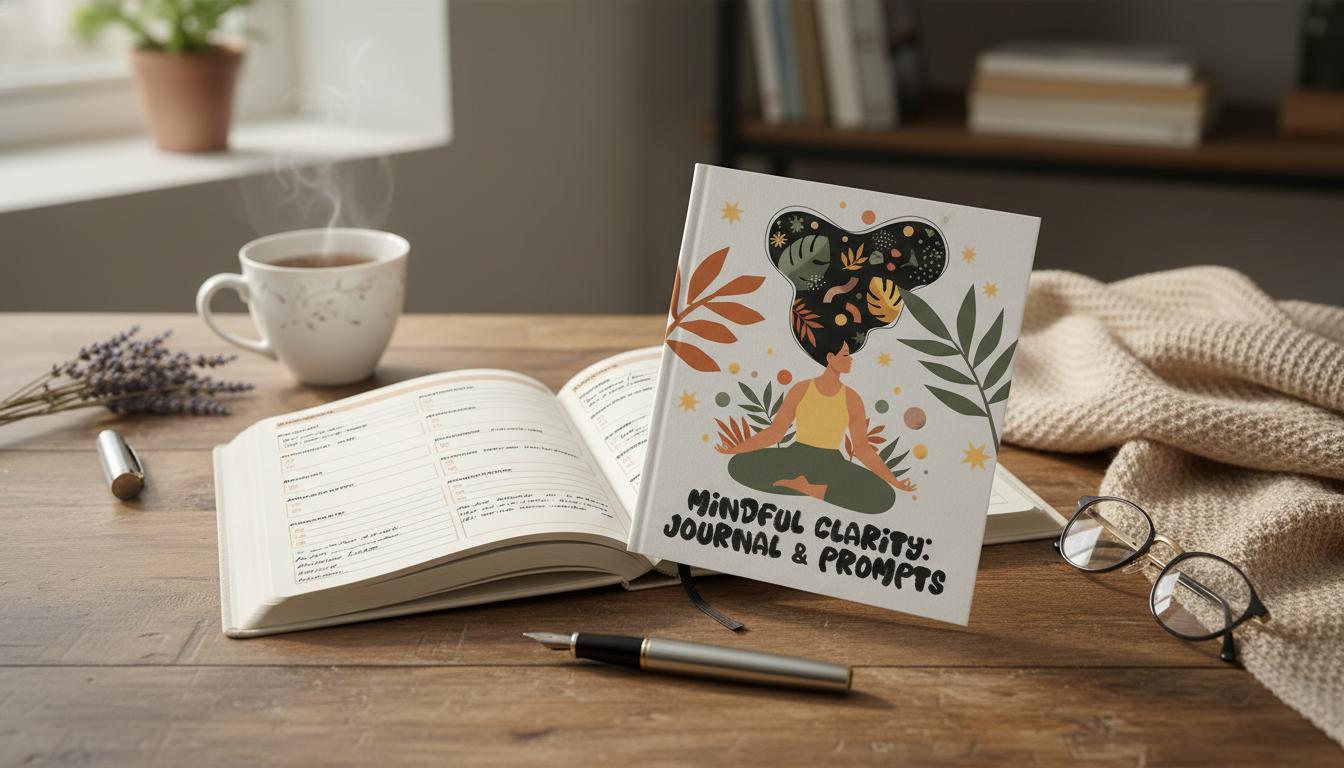
Mindful Clarity: A Printable Journal Routine for Calm, Focus, and Emotional Balance
A simple daily journaling rhythm can turn scattered thoughts into steady awareness. Mindful Clarity is designed for short, repeatable check-ins you can actually stick with—mindfulness questions that bring you back to the present moment, gratitude exercises that gently shift perspective, and reflective quotes that help connect insights to everyday life. The goal isn’t perfect writing; it’s creating a reliable pause where you can notice what’s real, name what matters, and choose what’s next.
What Mindful Clarity Includes
This printable journal is built for consistency without feeling heavy. Each page supports a quick reset that fits real-life schedules and fluctuating energy.
- Printable pages that support a consistent morning or evening reset
- Daily mindfulness prompts that guide attention to sensations, thoughts, and emotions without judgment
- Gratitude exercises that encourage noticing small wins, support systems, and meaningful moments
- Reflective quotes that act as a gentle theme for the day’s entry
- A structure that works for beginners (simple questions) and experienced journalers (deeper reflection)
If you want a ready-to-use set of pages, Mindful Clarity: Journal & Prompts (printable journal) is designed to be straightforward on busy days and surprisingly insightful over time.
How to Use the Journal in 10 Minutes a Day
The fastest way to build a calming habit is to keep it small. Ten minutes is long enough to interrupt autopilot, but short enough to be realistic—even during packed weeks.
- Choose a consistent time: first thing in the morning, a lunch break pause, or a wind-down routine before bed
- Start with one slow breath cycle (inhale, exhale, repeat) to shift from “thinking mode” to “noticing mode”
- Answer one mindfulness prompt only; stopping early is better than forcing a long session
- Complete one gratitude exercise with specific details (what happened, who was involved, why it mattered)
- Close with a short action step: one kind choice, one boundary, or one small next step for the day
10-Minute Daily Flow
| Minute | What to do | Outcome |
|---|---|---|
| 0–1 | Settle posture, take 3 slow breaths | Signals safety and slows reactivity |
| 1–5 | Complete a mindfulness prompt | Names what’s present without spiraling |
| 5–8 | Write 3 specific gratitude notes | Builds positive attention and balance |
| 8–10 | Read the quote and write one takeaway | Turns reflection into a guiding intention |
A Gentle Framework: Mindfulness, Gratitude, Reflection
Mindful journaling works best when it’s simple enough to repeat and structured enough to prevent mental spirals. This journal’s three-part rhythm is intentionally steady, so your nervous system learns what to expect: slow down, notice, reframe, integrate.
- Mindfulness section: supports awareness of body cues, emotional states, and thought patterns in real time
- Gratitude section: strengthens attention toward supportive experiences without denying challenges
- Reflection section: connects patterns across days (triggers, needs, values, progress)
- Quotes section: offers a steady anchor when words feel hard to find
- Over time, repeated entries can reveal what restores energy, what drains it, and what boundaries help
For readers who like to understand the “why,” reputable health sources note that mindfulness and gratitude practices can support stress management and well-being when practiced consistently. Useful starting points include the National Center for Complementary and Integrative Health, the Mayo Clinic, and the American Psychological Association.
Who This Printable Journal Fits Best
Mindful Clarity works especially well for people who want emotional steadiness without adding another complicated routine to the calendar.
- Busy schedules: quick entries that still feel meaningful
- Overthinkers: prompts that contain spirals and bring attention back to the present
- People building a self-care habit: clear structure reduces decision fatigue
- Anyone in a transition: career changes, moving, relationship shifts, new routines
- Those seeking emotional steadiness: a repeatable practice for noticing, naming, and choosing responses
If your mental load comes from logistics, pairing journaling with planning tools can be surprisingly calming. For example, The Empowered Budgeting Toolkit can reduce money-related uncertainty with a clear system, and the Minimalist Travel Packing Planner can ease pre-trip stress by turning “Did I forget something?” into a simple checklist-driven plan.
Ways to Keep the Practice Supportive (Not Perfectionistic)
The fastest way to quit journaling is to turn it into a performance. Keep it gentle and flexible so the journal becomes a place of relief, not another standard to meet.
- Use “good enough” entries: a few honest lines can be more helpful than a polished page
- Skip any prompt that feels overwhelming and choose a grounding alternative (breath, senses, or a simple gratitude list)
- Watch for tone: aim for curiosity rather than self-criticism
- If emotions feel intense, write what is true right now and add one stabilizing statement (e.g., “This feeling will change”)
- Consider pairing journaling with a brief walk, stretching, or a cup of tea to reinforce calm associations
Printable Setup Ideas
Mindful Clarity: Journal & Prompts
Find the printable set here: Mindful Clarity: Journal & Prompts | Printable Journal with Daily Mindfulness Prompts, Gratitude Exercises & Reflective Quotes for Mental Well-Being.
FAQ
How often should the journal be used to notice a difference?
Daily use is ideal, but 3–5 days per week is still enough to build momentum. Consistency matters more than length, so try brief entries for 2–4 weeks and notice changes in reactivity, focus, and emotional clarity.
Is this suitable for beginners who don’t know what to write?
Yes. Guided questions and quotes reduce blank-page pressure, so you can simply answer one prompt and write one gratitude item at first, then add more as it feels natural.
Can the pages be reused or reprinted?
Because it’s printable, you can reprint pages as needed and keep them in a binder or folder for easy rotation. If you prefer a digital workflow, you can also write your responses on a tablet or in a notes app while following the same page structure.











Leave a comment