Modern Etiquette Made Easy: Texting, Social & RSVPs
Modern Etiquette That Fits Real Life (Not a Rulebook)
Modern etiquette is less about memorizing “proper” behavior and more about making people feel considered—especially when communication is fast, public, and easy to misread. A simple framework for texting, social media, and invitations can prevent awkward moments, protect relationships, and help daily interactions feel smoother at work, with friends, and in family chats.
Today’s biggest etiquette wins usually come from three things: clarity (so nobody has to guess), timing (so you don’t accidentally add pressure), and privacy (so trust stays intact). When those are in place, kindness becomes easier to deliver—and easier to receive.
What “modern etiquette” actually solves
- Reduces misunderstandings caused by tone-free messages, quick replies, and group chats
- Helps balance friendliness with boundaries (time, attention, privacy)
- Sets clear expectations for invitations, plans, and commitments
- Protects reputations in semi-public spaces like comments, stories, and forwarding
- Improves day-to-day civility: small gestures that make shared spaces easier
Digital communication is powerful partly because it’s efficient—but efficiency can remove the soft cues that keep relationships comfortable. The Emily Post Institute notes that technology etiquette is largely about respect and consideration, not perfection or formality (Emily Post Institute — Digital Etiquette). And because social platforms are now a daily habit for most adults (Pew Research Center — Social Media Use), small missteps can travel farther than intended.
Texting manners that prevent the most common friction
- Response timing: match urgency to the topic (emergencies vs. casual updates) and avoid guilt-based follow-ups.
- Clarity beats speed: short, complete messages reduce back-and-forth (who/when/where + confirmation).
- Tone tools: use punctuation and emojis sparingly to clarify, not to escalate; avoid ALL CAPS for emphasis.
- Sensitive topics: move from text to call when stakes are high or emotions are involved.
- Group chat basics: keep threads on-topic, avoid “reply-all” noise, and don’t add people without asking when the topic is personal.
Quick texting choices that read as considerate
| Situation | Considerate move | What to avoid |
|---|---|---|
| Late-night message | Schedule it or send in the morning unless it’s urgent | “Sorry to bother” followed by a non-urgent request at 11 PM |
| No reply yet | One gentle follow-up after a reasonable window | Multiple pings or escalating punctuation (??? !!!) |
| Making plans | Offer 2–3 options and confirm the final plan | Vague “We should hang” with no next step |
| Sharing news | Ask if now is a good time for something heavy | Dropping serious info without context or support |
| Conflict brewing | Pause and switch to voice if needed | Paragraph battles that escalate misunderstandings |
Social media etiquette: privacy, credit, and public tone
- Posting people: ask before tagging or sharing identifiable photos, especially of kids, medical situations, or private homes.
- Credit and permission: attribute creators, don’t repost private content from closed accounts without consent, and avoid “screenshot sharing” as entertainment.
- Public comments vs. private messages: correct gently in private when possible; keep public replies short and non-combative.
- Stories and subtweets: avoid vaguebooking that invites speculation and puts mutuals in the middle.
- Boundaries: mute/unfollow is often kinder than passive-aggressive engagement; avoid using social media to punish or test people.
A helpful gut-check: if a post involves someone else’s face, home, relationship, health, or reputation, it’s not “just your content.” It’s shared context—and shared context deserves consent.
RSVPs and invitations: the simplest way to show respect for time and money
- RSVP promptly: a quick yes/no helps hosts plan seating, food, and budgets; silence creates avoidable stress.
- Plus-ones: treat the invitation as the rule—if a plus-one isn’t listed, ask once (politely) and accept the answer.
- Changes happen: if plans change, notify the host as soon as possible with a brief explanation; don’t over-justify.
- Arrival etiquette: aim for “on time” unless the event type suggests a small buffer; don’t show up early to a dinner unless asked.
- Gratitude loop: a same-day message for casual gatherings and a more formal thank-you for major hosting or gifts keeps relationships warm.
For most hosts, the hardest part isn’t cooking or decorating—it’s uncertainty. A simple RSVP is a small courtesy that saves real money and mental energy.
Everyday politeness that still matters (and feels modern, not stuffy)
- Micro-considerations: hold doors when practical, share space, and keep volume appropriate in public settings.
- Service interactions: be direct and kind; “please/thank you” and patient pauses reduce friction.
- Work and community spaces: clean up after yourself, respect shared resources, and avoid “small messes” that become someone else’s chore.
- Apologies: own impact, not intent—keep it short, sincere, and action-oriented (“I’m sorry I missed it. I’ll confirm earlier next time.”).
- Respecting attention: limit multitasking in conversations; put phones away during meals and meaningful moments.
Polite boundaries: saying no, following up, and handling awkward moments
A printable micro-course that makes etiquette easy to practice
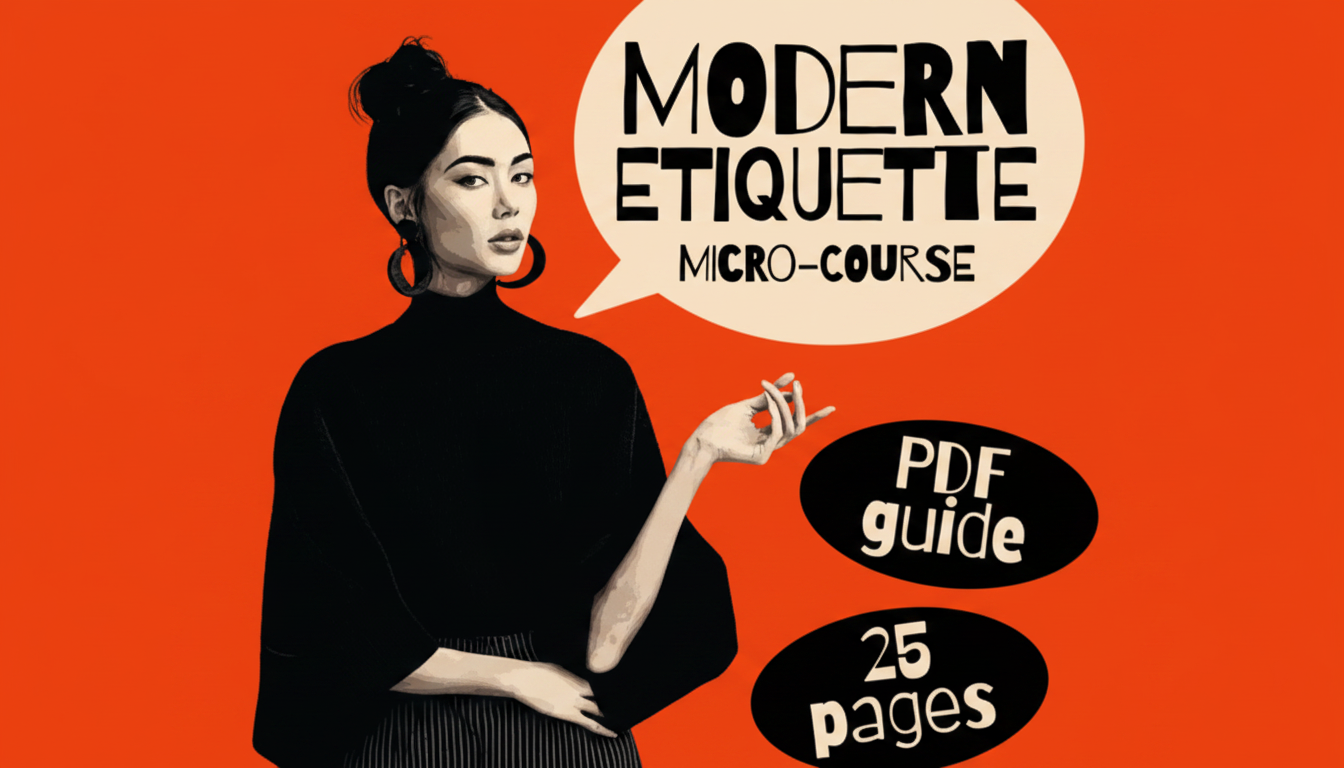
If you want a simple, practical refresher that you can skim in a minute before hitting “send,” the Modern Etiquette Micro-Course (printable digital guide) is designed for everyday use—clear rules of thumb, common scenarios, and language you can borrow when you need to set a boundary without sounding harsh.
For people who like pairing communication upgrades with other life systems, The Empowered Budgeting Toolkit can complement the same “less stress, more clarity” mindset—especially when planning travel, shared expenses, or group events where money and expectations can get awkward fast.
FAQ
What is the golden rule of digital etiquette?
Treat every message as if it could be read aloud to the other person in a neutral tone. Aim for clarity, kindness, and good timing, and avoid sharing anything that would feel violating if it were forwarded or posted publicly.












Leave a comment