Toddler Nightmares: Quick Comfort Steps & Bedtime Fixes
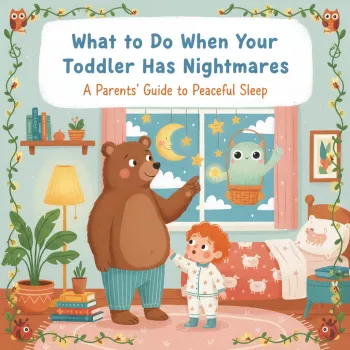
What to Do When Your Toddler Has Nightmares (and Why It’s So Common)
Toddler nightmares can feel intense for both child and parent—tears, fear, and repeated wake-ups can quickly derail sleep for the whole household. The encouraging news: most nightmares are a normal part of development, and a calm, consistent response paired with a few bedtime tweaks often reduces how often they happen and how long your child stays upset.
If you’d like additional background on normal sleep and night wakings, helpful overviews are available from American Academy of Pediatrics — HealthyChildren.org and MedlinePlus (Nightmares).
Nightmares, Night Terrors, and Normal Sleep Fears
Not every scary wake-up is the same. Knowing what you’re seeing helps you respond in the most effective way.
- Nightmares usually happen in the second half of the night. Toddlers often wake fully, cry, want comfort, and may remember fragments of a scary image.
- Night terrors often occur earlier in the night. A child may look awake (open eyes, sitting up, screaming), but be confused, hard to console, and typically won’t remember it the next day. For more detail, see Cleveland Clinic — Night Terrors.
- Normal toddler fears (darkness, separation, sudden noises) can spike during big changes: a new daycare, travel, illness, potty training, a new sibling, or generally “big feelings” days.
- If episodes are frequent, severe, or paired with breathing issues, unusual movements, or major daytime sleepiness, it’s worth discussing with a pediatrician.
Quick Comparison: Nightmare vs. Night Terror
| Feature | Nightmare | Night terror |
|---|---|---|
| Typical timing | Later night / early morning | First third of the night |
| Child response | Wakes, seeks comfort, may talk | May scream or thrash, hard to console |
| Memory next day | Often remembers fragments | Usually no memory |
| Best parent approach | Comfort, reassurance, return to sleep | Keep safe, minimal interaction, let pass |
What to Do in the Moment: A Calm, Repeatable Response
When your toddler wakes scared, the goal is to help their body settle without turning the wake-up into a “new bedtime.” Try this sequence and keep it as consistent as possible.
- Arrive quickly and quietly. Keep lights low and your voice soft so their brain doesn’t switch into fully-awake play mode.
- Use the same short reassurance each time. A steady phrase helps: “You’re safe. I’m here. That was a scary dream.”
- Ground the body. Offer a sip of water, a cuddle, slow rocking, or a gentle back rub. Avoid screens and bright lights, which can prolong wakefulness.
- Validate without feeding the fear. “That felt scary” is enough—then orient to safety: their room, their bed, your presence.
- Skip dream investigations at 2 a.m. Detailed questions can increase alertness and make future wake-ups more likely.
- If they request a room check, do it once. A quick “safety scan” (closet, under bed) can help—then return to bed to avoid repeated checks becoming a habit.
Comfort Tools That Help Toddlers Feel Safe
Small, predictable tools often make a big difference because they provide the same “safe signal” night after night.
- Comfort object: A favorite blanket or stuffed animal can be a powerful cue for security and sleep.
- Warm, dim night light: Choose low brightness and a warmer tone; overly bright lights can disrupt sleep.
- White noise: Consistent sound can mask creaks, traffic, or sudden household noises that trigger worry.
- A simple “bravery ritual”: One deep breath, one hug, one phrase, then tuck-in—repeat in the same order every time.
- “Dream reset” technique: Ask for a safe image (puppy, rainbow, cozy cabin) and guide them to picture it for 10–20 seconds.
Bedtime Routine Tweaks That Reduce Nightmares
Nightmares can intensify when toddlers are overtired, overstimulated, or carrying unprocessed stress into bedtime.
Daytime Strategies to Address the Root Causes
When to Get Extra Support
A Guided Option for Parents Who Want a Step-by-Step Plan
Consistency is often the hardest part at 2 a.m. A structured guide can help you stick to a short script, reduce stimulation, and make routine adjustments without guesswork. For a ready-to-use approach focused on practical comforting tips and bedtime solutions, see: What to Do When Your Toddler Has Nightmares | Ebook Guide for Parents | Practical Comforting Tips & Bedtime Solutions.
If travel is a common trigger for bedtime anxiety, keeping routines simple and predictable on the road can help. Some families like having a quick, repeatable packing system so evenings feel less chaotic: Minimalist Travel Packing Planner | Digital Packing Guide for Light, Smart & Stress-Free Trips.
FAQ
How can a parent tell the difference between nightmares and night terrors?
Look at timing and awareness: nightmares usually happen later and your child wakes and can be comforted, often remembering pieces in the morning. Night terrors usually happen in the first part of the night, and your child may appear awake but be confused and difficult to console, with no memory the next day.
Should a toddler sleep in a parent’s bed after a nightmare?
Comfort first, then aim to return your toddler to their bed when possible so sleep expectations stay consistent. If they’re very upset, a brief cuddle, sitting nearby for a few minutes, or a temporary floor mattress in your room can be a middle step—choose one approach you can repeat calmly.
What if nightmares happen every night for weeks?
Review bedtime timing (overtiredness matters), media exposure, and possible stressors or transitions, and add daytime emotional check-ins. If it persists or significantly disrupts daytime functioning—or if there are red flags like breathing pauses, unusual movements, or extreme sleepiness—check in with a pediatrician.










Leave a comment