Stronger Together: Easy Family Bonding Routines
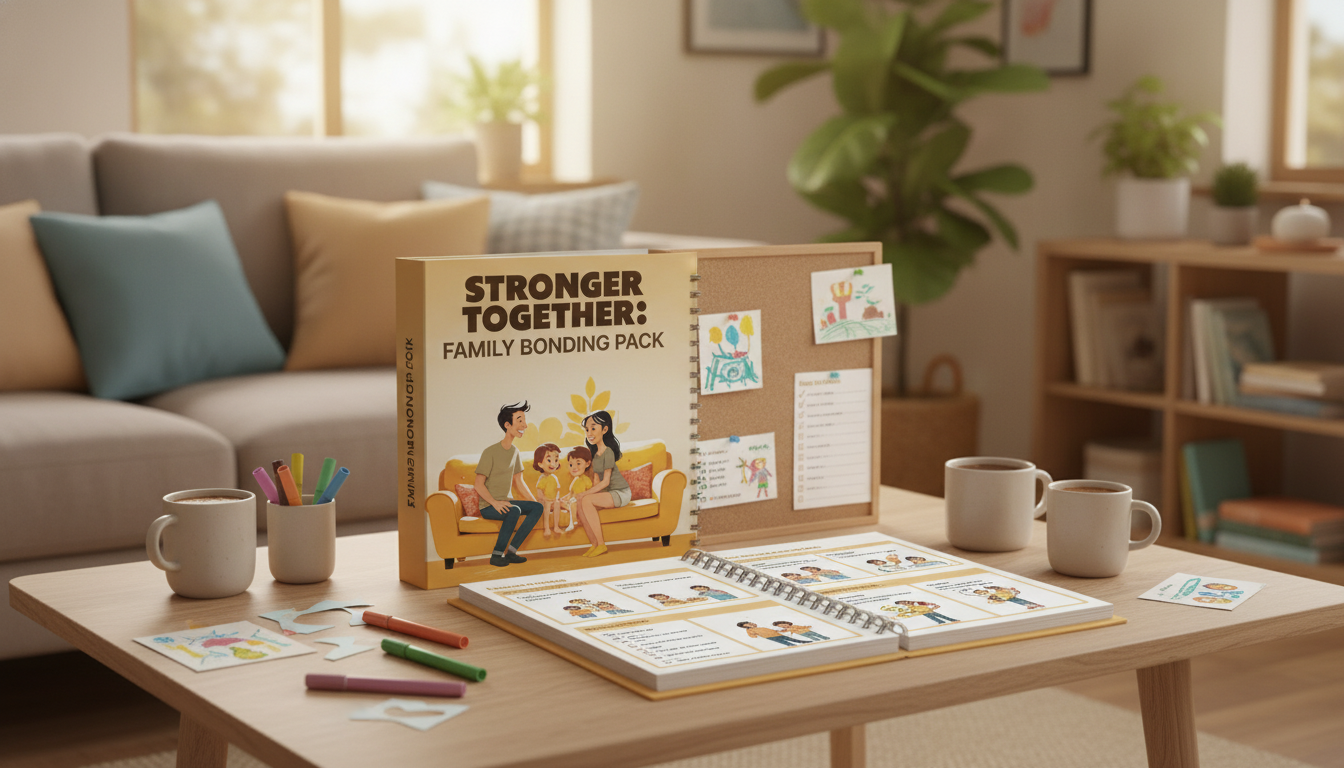
Stronger Together: A Simple Family Bonding Plan for At-Home and Outdoor Moments
Busy schedules, screens, and everyday stress can make quality time feel hard to plan. A small, repeatable routine often works better than a “perfect” family night that never happens. The Stronger Together: Family Bonding Pack is designed for those real-life weeks—ready-to-use activities, a family time checklist, and an eBook that helps turn short moments into meaningful connection.
Supportive family relationships are strongly linked with children’s well-being and resilience over time, and even small, consistent check-ins can help reinforce that sense of security. For more on the role of connection in healthy development, see resources from the American Academy of Pediatrics (HealthyChildren.org) and guidance on resilience from the American Psychological Association.
What the Family Bonding Pack Helps With
- Creates low-pressure ways for kids and parents to reconnect during weekdays and weekends
- Offers both indoor and outdoor options so plans don’t depend on weather or budgets
- Encourages conversation, teamwork, and shared memories without requiring big trips
- Reduces “what should we do?” decision fatigue with guided prompts and a checklist structure
Instead of relying on inspiration at 7:30 p.m., the goal is to make connection feel “grab-and-go.” When families already have a prompt, a page, or a quick challenge ready, it’s easier to start—especially on days when everyone’s energy is low.
What’s Included and How Each Piece Gets Used
- Digital activities guide: choose an activity by time available (10 minutes, 30 minutes, or longer)
- Printable pages: set a weekly “family time” plan on the fridge or in a shared binder
- At-home connection activities: quick wins for after school, after dinner, or weekends
- Outdoor connection activities: simple ideas for parks, walks, backyard time, or neighborhood adventures
- Family time checklist: track what was tried, what worked, and what to repeat
Quick guide to picking the right activity
| Situation | Best pick | Why it works |
|---|---|---|
| Everyone is tired after a long day | 10-minute connection prompt | Short, predictable, and easy to finish |
| Kids have extra energy | Outdoor mini-challenge | Movement lowers tension and boosts cooperation |
| Family wants screen-free time | Printable activity page | Hands-on and naturally interactive |
| A weekend block is open | Longer guided activity | Creates deeper conversation and shared memories |
A Weekly Rhythm That Makes Family Time Happen
A simple rhythm beats an ambitious plan. Aim for “micro-moments” during the week and one longer session when there’s more breathing room.
- Pick 2–3 days for short connection moments (10–20 minutes) to keep it realistic
- Choose 1 longer activity on a weekend day or a flexible evening
- Assign simple roles: kid chooses activity, parent gathers supplies, everyone sets a timer
- Use the checklist to mark wins and note what to adjust next week
- Keep a “repeat list” of favorites so planning gets easier over time
If consistency is tough, start with one “anchor moment” (for example, a 10-minute prompt right after dinner on Tuesdays). Once that sticks, add a second day. The checklist helps you see progress even when the week feels messy.
At-Home Connection Ideas That Don’t Require Special Supplies
At-home bonding works best when it fits the natural flow of the day—right after school, while dinner finishes, or as a calm reset before bedtime.
- Conversation starters that move beyond yes/no answers (favorites, memories, hopes, and “what if” questions)
- Mini teamwork games that build cooperation (build, sort, plan, or solve together)
- Family gratitude and appreciation moments to reduce conflict and increase warmth
- Creative prompts for drawing, storytelling, or making a “family values” poster
- Low-cost celebration ideas for small wins (end-of-week recap, compliment circle, family playlist night)
One helpful approach: keep the “activation energy” low. If an activity needs ten steps to set up, it’s less likely to happen on a Tuesday. Choose prompts you can do at the table, on the couch, or while folding laundry together.
Outdoor Connection Ideas for Walks, Parks, and Backyards
Outdoor time adds built-in variety: movement, fresh air, and new things to notice. It also helps kids (and adults) decompress before trying to talk through feelings.
- Neighborhood scavenger-style prompts that encourage noticing and talking
- Movement challenges that can be adapted for different ages and energy levels
- Nature-based conversation cues (sounds, colors, textures, “spot and share” finds)
- Family teamwork tasks (plan a route, take turns leading, create a shared “mission”)
- Simple reflection questions on the way home to lock in the memory
Printing and Using the Digital Pack Smoothly
When the Checklist Makes the Biggest Difference
Helpful Digital Add-Ons for Organized Routines
- Stronger Together: Family Bonding Pack | Digital Family Activities Guide for Kids & Parents | Printable At-Home & Outdoor Connection Activities | Family Time Checklist & eBook
- Pet Travel Essentials Checklist for Safe Trips | Printable Pet Travel Planner | Road Trip & Vacation Packing List for Dogs & Cats
- Minimalist Travel Packing Planner | Digital Packing Guide for Light, Smart & Stress-Free Trips
FAQ
What ages does the Family Bonding Pack work best for?
It works well for a wide range of ages because you can adapt prompts and roles. For younger kids, keep questions concrete and shorten the timer; for school-age kids, add teamwork goals; for tweens/teens, let them lead an activity or choose deeper conversation topics and longer sessions.
Do the activities require special materials or a big time commitment?
Most activities use basic household items (paper, pens, a timer) and can be done in 10–30 minutes. On low-energy days, choose a short connection prompt; when you have more time, pick a longer guided activity that supports richer conversation and shared memories.
Can this be used by co-parents, grandparents, or blended families?
Yes—using the checklist and a predictable weekly rhythm can help maintain consistency across households and caregivers. Neutral, low-pressure activities work especially well, and repeating favorites helps kids feel grounded even when schedules change.











Leave a comment