Printable Couples Conflict Workbook to Resolve Arguments

A Practical Conflict-Resolution Workbook for Couples That Turns Arguments Into Understanding
Recurring arguments often come from predictable patterns: missed bids for connection, unclear requests, and conversations that escalate too fast. A printable conflict-resolution workbook can slow the moment down, guide both partners through listening and repair, and help rebuild trust through repeatable routines—without needing perfect timing or perfect wording.
What Changes When Couples Use a Structured Workbook
When emotions spike, most couples default to old habits: interrupting, defending, keeping score, or going quiet. A structured workbook replaces that reactive loop with a shared process you can both agree to follow—even when you don’t agree on the issue.
- Replaces “win/lose” debates with a shared process both partners can follow
- Creates a neutral container for hard topics (tone, timing, and turn-taking are built in)
- Turns vague complaints into specific, actionable requests and agreements
- Builds accountability with written reflections and follow-up check-ins
- Helps separate the issue from the story: what happened, what it meant, what’s needed next
This structure can also reduce classic escalation traps like criticism, defensiveness, and stonewalling—patterns described by the Gottman Institute. The goal isn’t to sound perfect; it’s to keep the conversation workable long enough to reach repair.
How to Use a Printable Workbook During a Real Argument (Without Making It Awkward)
The easiest time to introduce a workbook is before a big blowup—when you’re calm. Still, it can work mid-argument if you treat it like hitting “pause,” not like handing your partner homework.
- Pause early: agree on a 10–20 minute reset when voices rise or either partner feels flooded.
- Choose one topic only: write a one-sentence “the problem we’re solving today” statement.
- Take turns: one partner speaks while the other mirrors back the gist and emotion before responding.
- Name the need underneath: respect, reassurance, autonomy, closeness, fairness, rest, or clarity.
- End with a small next step: one behavior to start, one to stop, and a time to revisit.
If either person feels physically keyed up (racing heart, shaking, tunnel vision), treat that as a real signal to slow down. The American Psychological Association notes that anger-management skills like taking a break and using calming techniques can prevent anger from taking control—exactly what a good workbook session is designed to support.
Core Skills the Exercises Should Practice
A useful conflict-resolution workbook doesn’t just “talk about feelings.” It trains specific, repeatable skills that make conflict safer and more productive over time.
- Active listening: reflecting content and emotion without correcting or defending.
- Repair attempts: quick phrases/actions that de-escalate (“I want to get this right,” “Can we restart?”).
- Soft startups: raising an issue with a feeling + need + specific request.
- Boundaries and timeouts: pausing responsibly with a clear plan to resume.
- Problem-solving: brainstorming options, choosing a test solution, and reviewing results.
Over time, the workbook becomes less of a “tool you pull out” and more of a shared language: how you start hard conversations, how you pause, and how you return.
A Weekly Check-In Routine That Prevents the Same Fight From Repeating
Many arguments repeat because couples only talk when something is already wrong. A weekly check-in gives you a predictable, low-stakes space to notice friction early, make small agreements, and build confidence that problems won’t be ignored.
- Pick a consistent time (20–30 minutes) when neither partner is rushed or hungry
- Start with positives: each partner names one appreciated action from the week
- Review one friction point: what triggered it, what each partner needed, what would help next time
- Make one micro-agreement: something measurable (who does what, by when, how often)
- Close with connection: one plan for quality time or a small gesture of care
Weekly Check-In Template (Print and Repeat)
| Step | Prompt | Example Output |
|---|---|---|
| Appreciation | What did you notice and value? | “Thanks for handling bedtime when I was exhausted.” |
| Friction point | What happened (facts only)? | “We disagreed about plans after work.” |
| Need | What did you feel and need? | “I needed predictability and a quick heads-up.” |
| Request | What specific change would help? | “Text by 3 pm if plans might change.” |
| Agreement | What will each partner do this week? | “I’ll text updates; you’ll confirm by 4 pm.” |
Rebuilding Trust After Hurt: From Apology to Repair Plan
Trust doesn’t rebuild from one heartfelt talk—it rebuilds from consistent follow-through. When there’s been a rupture (a harsh comment, a broken promise, an ignored boundary), a workbook helps you move from “sorry” to a shared repair plan.
If there is intimidation, threats, or violence, prioritize safety and immediate support. The National Domestic Violence Hotline provides confidential resources and guidance.
Who This Workbook Fits Best (and When Another Approach May Be Better)
Printable Resource to Put the Process Into Practice
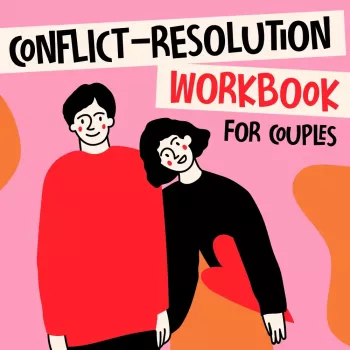
- Conflict-Resolution Workbook for Couples | Printable Relationship Communication eBook | Improve Listening, Resolve Arguments, Rebuild Trust
- The Empowered Budgeting Toolkit (a practical companion if money conversations are one of your most common conflict triggers)
FAQ
How long should a conflict-resolution session take?
Aim for 20–45 minutes so it stays focused and doesn’t turn into an exhaustion marathon. If you’re not landing it today, end with one small agreement and schedule a follow-up time rather than pushing past your limits.
What if one partner shuts down or gets overwhelmed?
Use a structured pause: set a clear return time (for example, 20 minutes) and do a quick grounding reset before restarting. When you come back, begin with mirroring/validation for a few turns before moving into solutions.
Can a workbook help rebuild trust after repeated arguments?
Yes—trust grows when repair steps are consistent, agreements are written clearly, and follow-through is tracked without guessing or mind-reading. If there’s ongoing betrayal, contempt, or fear, professional support can help provide safety and structure beyond what a workbook can offer.











Leave a comment