First Puppy Mistakes to Avoid: Training, Crate & Socializing
What not to do when you first get a puppy?
Bringing home a puppy is exciting, but a few common missteps can slow training and create avoidable stress. Here are the biggest “don’ts” to watch for during those first days and weeks.
Don’t skip structure on day one
A brand-new puppy can’t “just figure it out.” Avoid a free-for-all schedule and start simple routines immediately: consistent potty breaks, meals at set times, and calm downtime. Predictability helps a puppy learn faster and feel safer.
Don’t punish accidents or use harsh corrections
Scolding, rubbing a puppy’s nose in a mess, or using intimidation teaches fear—not potty skills. Clean accidents thoroughly and focus on prevention: more frequent potty trips, supervision, and rewarding success the moment it happens.
Don’t give too much freedom too soon
Letting a puppy roam the house unsupervised is a fast track to chewing, accidents, and unsafe behavior. Use baby gates, a leash in the house, or a crate/playpen to limit space until good habits are consistent.
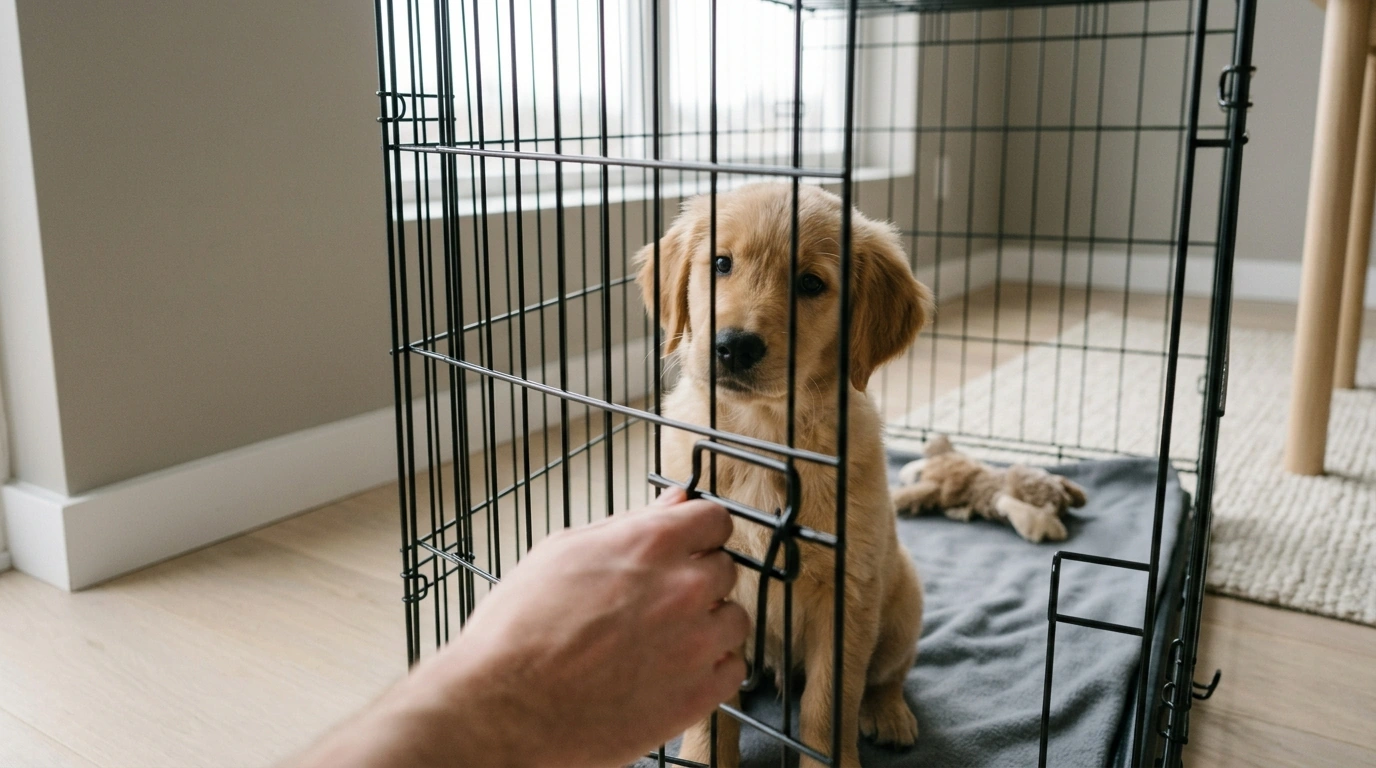
Don’t rush crate training—or use the crate as a penalty box
Forcing a puppy into the crate or crating only after “bad” behavior can create resistance. Introduce the crate with short, positive sessions, treats, and calm praise so it becomes a safe place, not a threat.
Don’t flood them with overwhelming experiences
Socialization matters, but too much too fast can backfire. Avoid crowded stores, chaotic dog parks, or being passed around by strangers right away. Keep early exposures brief, positive, and controlled.
Don’t ignore bitey or jumpy behavior because “they’ll grow out of it”
Mouthing and jumping are normal, but they still need guidance. Redirect to appropriate chew toys, reward gentle behavior, and keep rules consistent so your puppy learns what earns attention.
For a step-by-step routine that covers potty training, crate training, and starter commands, follow this printable 4-week puppy training plan.
FAQ
How many potty breaks does a new puppy need each day?
Most puppies need potty breaks very frequently: after waking, after eating or drinking, after play, and every 1–2 hours at first. Consistency reduces accidents and speeds up learning.








Leave a comment