Printable 4-Week Puppy Training Plan: Potty, Crate & Cues
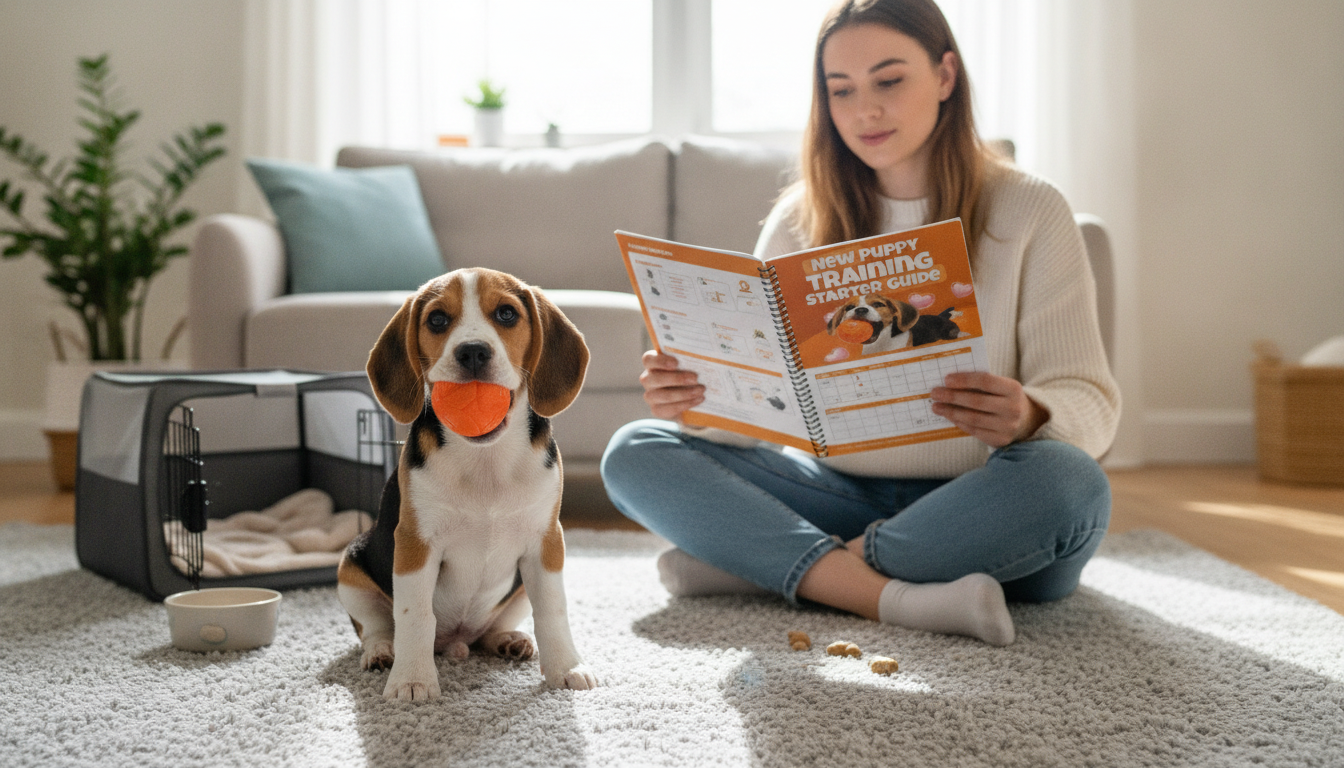
New Puppy Training Starter Guide: A Printable 4-Week Routine for House-Training, Commands, and Socialization
A new puppy learns fastest when daily life is predictable: consistent potty trips, short training sessions, and safe social exposure. A printable plan makes it easier to stay consistent during the busy first month—especially when sleep is short and accidents happen. The structure below maps out what to focus on each week, what to practice each day, and how to handle common setbacks without overcomplicating training.
What to Set Up Before Day 1 (So Training Starts Smoothly)
Set your home up like a training environment, not a guessing game. Management prevents problems while your puppy’s brain catches up.
- Create a puppy-safe zone: crate + playpen or gated room, with water, chew options, and an easy-to-clean floor area.
- Pick a potty station outdoors (same spot every time) and a consistent cue such as “go potty.”
- Choose rewards: tiny, soft treats + a favorite toy; reserve the best rewards for potty success and recalls.
- Decide household rules now: furniture access, sleeping location, who handles night potty breaks, and which rooms are off-limits.
- Plan a simple schedule: wake-up potty, meals, play, nap, potty—repeat. Puppies thrive on repetition more than variety.
- Prepare management tools: enzymatic cleaner, leash, poop bags, collar/harness ID tag, and a chew rotation to prevent biting the wrong items.
If you want a ready-to-print routine (with checkboxes and week-by-week priorities), use the New Puppy Training Starter Guide (Printable 4-Week eBook) as a simple daily anchor.
The First Thing to Teach a New Puppy
The fastest “quality of life” skill isn’t a fancy trick—it’s attention. Attention makes potty training smoother, biting easier to redirect, and recall training more rewarding.
- Start with name recognition + attention: say the puppy’s name once; when the puppy looks at you, mark with “yes” and reward.
- Pair attention with a simple cue: “come” or “touch” (nose-to-hand target) to build a habit of moving toward people.
- Begin house-training immediately: take the puppy out after waking, after eating/drinking, after play, and every 30–60 minutes at first.
- Teach calm handling: brief, gentle touches to paws, ears, collar, and mouth area followed by rewards to reduce future grooming/vet stress.
- Keep sessions short: 1–3 minutes, several times per day, ending before the puppy loses focus.
For additional guidance on early learning and reward-based training, the American Kennel Club’s puppy training basics is a solid reference for new owners.
A Printable 4-Week Training Roadmap (Daily Focus by Week)
Progress tends to look like two steps forward, one step back—especially during growth spurts or new environments. A weekly focus keeps you from trying to teach everything at once.
| Week | Primary goals | Daily practice (5–15 min total) | Socialization focus |
|---|---|---|---|
| Week 1 | House-training habits, crate comfort, bite redirection | Name + attention, crate treats, potty cue, gentle handling | Home sounds, surfaces, calm visitors |
| Week 2 | Basic cues, leash intro, impulse control | Sit/down, touch, short leash follow, leave-it basics | Car rides, brief public observation, friendly adults |
| Week 3 | Polite routines, distractions, calm settling | Doorway wait, mat/settle, recall games, leash skills | Novel objects, hats/umbrellas, calm dog exposure (safe) |
| Week 4 | Consistency and confidence | Mix cues, longer settle, recall with mild distractions, grooming practice | Vet-style handling, short errands, different environments |
House-Training That Actually Sticks (Without Guessing)
House-training is mostly timing and prevention. Your puppy can’t “hold it” reliably until their body matures, so the plan is to engineer wins.
- Use a timer early on: take the puppy out every 30–60 minutes when awake; gradually extend as success improves.
- Supervision or confinement prevents rehearsal of accidents: if eyes aren’t on the puppy, use the crate/playpen.
- Reward within 1–2 seconds of finishing outside to clearly connect potty with the reward.
- If an accident happens: interrupt gently (no scolding), take the puppy outside, then clean indoors with enzymatic cleaner.
- Track patterns: many puppies eliminate right after waking, after eating, and during high excitement—plan proactive potty trips.
- Night strategy: last potty trip right before bed; expect 1–2 nighttime trips at first for young puppies; keep it quiet and boring.
For a deeper look at routines and troubleshooting, the ASPCA housetraining guide aligns well with reward-based methods.
Crate Training and Alone-Time Skills (Preventing Separation Problems)
Crate training isn’t about “locking a puppy up”—it’s teaching a safe off-switch and building comfort with short separations. Those skills pay off during naps, errands, travel, and vet visits.
Beginner Commands That Pay Off Fast (And How to Practice Them)
Socialization: Safe Exposure Without Overwhelming Your Puppy
The AVSAB position statement on puppy socialization is a helpful benchmark for balancing safety and early experiences.
Common Problems in the First Month (Quick Fixes That Fit the Routine)
Making the Printable Plan Work in Real Life
If you’re planning short car rides or quick outings as part of Week 2–4 socialization, the Pet Travel Essentials Checklist for Safe Trips makes it easy to pack treats, cleanup supplies, and safety basics without scrambling at the door.
FAQ
What is the first thing you should teach a new puppy?
Focus on name recognition and attention (“look”), then immediately start a house-training routine with frequent potty trips and rewards for going outside. Add a simple recall-style game like “touch” or “come” so your puppy practices moving toward you many times a day.
How long does it take to house-train a puppy?
Many puppies improve noticeably within a few weeks when accidents are prevented and outdoor potty is rewarded every time. Full reliability often takes months and depends on age, bladder development, supervision, and how consistent the routine stays.











Leave a comment