Study Skills System: Focus, Memory, Better Results
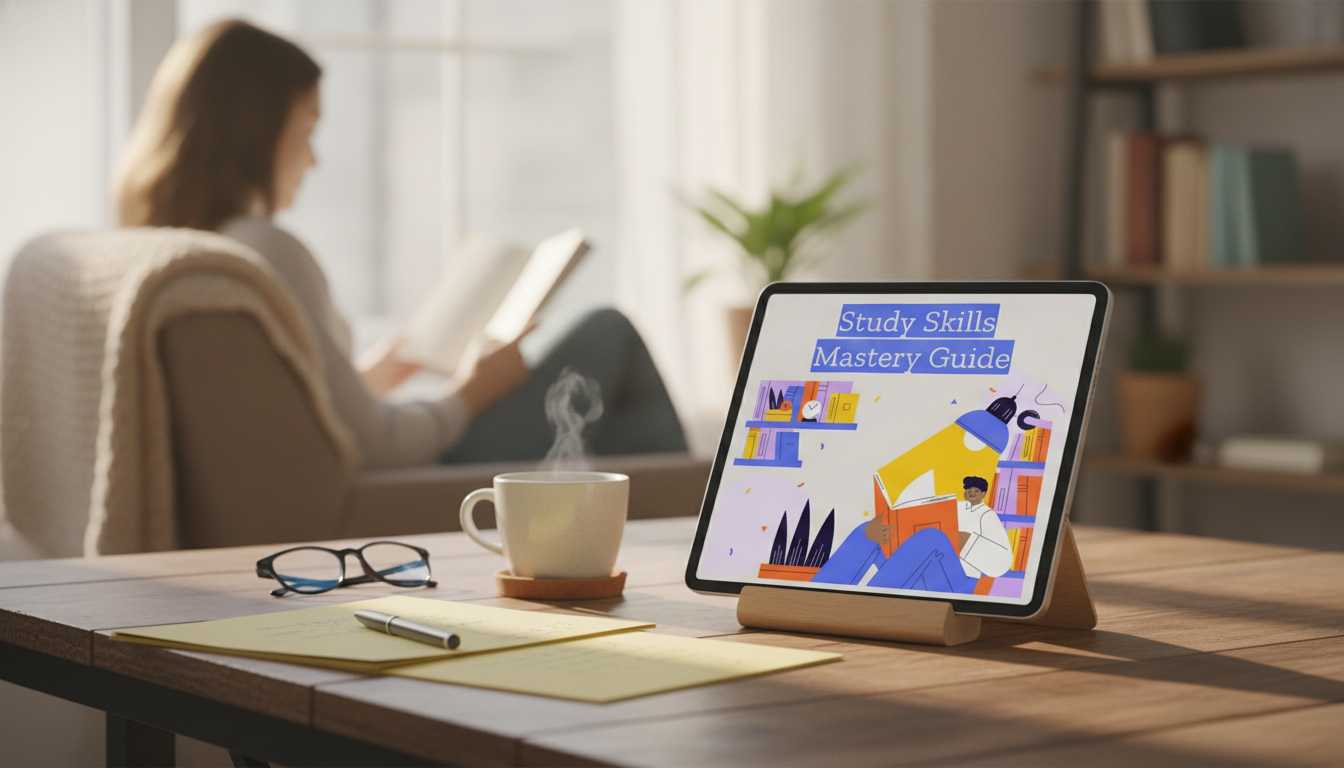
Study Skills Mastery Guide: A Practical System for Focus, Memory, and Better Results
Strong study skills are less about working longer and more about using reliable routines: planning what matters, learning actively, remembering efficiently, and reviewing on a schedule. The goal is repeatability—so you can sit down, start quickly, and leave each session with material that actually sticks. Below is a practical system you can reuse for any subject, plus a printable-style checklist you can run every time you study.
For a ready-to-use version with templates and a session checklist you can keep on your phone or tablet, see the Study Skills Mastery Guide | Digital Study Guide, Learning Strategies eBook, Focus Tips, Study Methods, Memory Techniques, Study Checklist PDF.
What “study skills” actually include
Study skills aren’t one trick—they’re a set of small, trainable behaviors that work together. When one part is missing (like planning or attention control), everything else feels harder.
- Planning skills: turning a syllabus or goal into weekly targets, daily tasks, and realistic time blocks
- Attention skills: reducing distractions, starting quickly, and sustaining effort with structured breaks
- Learning skills: taking notes that are easy to review, practicing retrieval, and connecting ideas across lessons
- Memory skills: using spaced repetition, interleaving, and simple mnemonic tools when needed
- Test skills: doing timed practice, reviewing errors, and building calm exam routines
Research reviews consistently find that strategies like practice testing and distributed practice (spacing) outperform passive rereading for durable learning (see Dunlosky et al., 2013 and Karpicke & Blunt, 2011).
Set up a study plan that is easy to follow
A “good” plan is one you can execute on an average day. Keep it simple, visible, and forgiving enough to survive interruptions.
- Start with outcomes: list what “done” looks like (chapters covered, problem sets completed, essay draft finished).
- Map a weekly rhythm: choose consistent study windows and protect them like appointments.
- Use time estimates: assign minutes to each task; break anything over 45–60 minutes into smaller steps.
- Prioritize by exam weight and difficulty: spend more time on high-impact topics and weak areas.
- Build buffers: include catch-up blocks to prevent one bad day from derailing the entire week.
Simple weekly planning template
| Step | What to write | Example |
|---|---|---|
| 1. Targets | Top 3 outcomes for the week | Finish Unit 3 notes; 60 practice questions; outline essay |
| 2. Sessions | Number of sessions needed | 5 sessions × 50 minutes |
| 3. Tasks | Small tasks per session | Review flashcards; do 12 questions; correct mistakes |
| 4. Review | One weekly recap slot | Sunday 30 minutes: error log + plan next week |
If planning consistency is the issue (not motivation), using one set of templates across classes reduces “setup friction.” That’s the advantage of a single guide you can reuse, like the Study Skills Mastery Guide.
Focus strategies that make studying start and stick
Focus is often about removing “first 5 minutes” resistance. Build a tiny routine that triggers action, then use structure to stay on track.
- Use a short launch routine: clear desk, open materials, write the first micro-task, start a timer.
- Work in cycles: 25–50 minutes focused work, 5–10 minutes break; longer break after 2–3 cycles.
- Design the environment: silence notifications, keep only one tab/app relevant, and remove “just-in-case” distractions.
- Make distraction capture easy: keep a scrap list for off-topic thoughts to handle later.
- End with a clear stopping point: write the next step before finishing so the next session starts faster.
A practical tweak: decide your “first micro-task” before you open your laptop (example: “Do Q1–Q3, then check answers”). When the task is already defined, your brain doesn’t negotiate.
Study methods that create real learning (not just rereading)
Real learning shows up when you can produce knowledge without looking. That’s why retrieval-based approaches tend to win: they force the brain to reconstruct and strengthen pathways.
Match the method to the task
| Method | Best for | Quick way to use it today |
|---|---|---|
| Active recall | Concepts and definitions | Write 5 questions from notes; answer without looking |
| Practice testing | Exam readiness | Do 10 timed questions; review every miss in an error log |
| Spaced repetition | Long-term retention | Schedule 3 short reviews this week for the same topic |
| Interleaving | Problem solving and application | Alternate problem types A/B/C instead of batching |
| Teach-back | Understanding and clarity | Record a 2-minute explanation; note any stumbles |
Spacing is especially reliable for long-term memory—revisiting information over time improves retention compared with cramming (see the APA’s definition of the spacing effect).
Memory techniques that are simple and reliable
A reusable study checklist for each session
Session checklist (printable-style)
| Phase | Checklist item | Done |
|---|---|---|
| Before | Goal is specific and timed | ☐ |
| Before | Distractions removed (notifications, extra tabs) | ☐ |
| During | Active recall used at least once | ☐ |
| During | Mistakes captured in an error log | ☐ |
| After | Next session scheduled (date + task) | ☐ |
If you want this checklist plus planning pages in one place, the Study Skills Mastery Guide bundles the system so each session starts faster.
Using a digital guide to make the system consistent
For students managing school alongside real-world responsibilities, pairing study structure with broader planning can help. The The Empowered Budgeting Toolkit | 4-in-1 Bundle| Budget Planner & Excel Guide| Monthly Expense Savings, Wealth Strategies & Guided Affirmations for Wealth is a separate option for organizing finances and monthly planning. And if you like checklist-based planning for life logistics too, the Minimalist Travel Packing Planner | Digital Packing Guide for Light, Smart & Stress-Free Trips applies the same “reduce friction with templates” idea to travel prep.
FAQ
What are study skills and examples?
Study skills are habits and techniques for planning your work, focusing your attention, learning actively, remembering efficiently, and preparing for tests. Examples include time blocking, active recall, practice testing, spaced repetition, effective note-taking, and keeping an error log to learn from mistakes.










Leave a comment