10 Iconic U.S. National Parks: Fast Facts Travel Guide
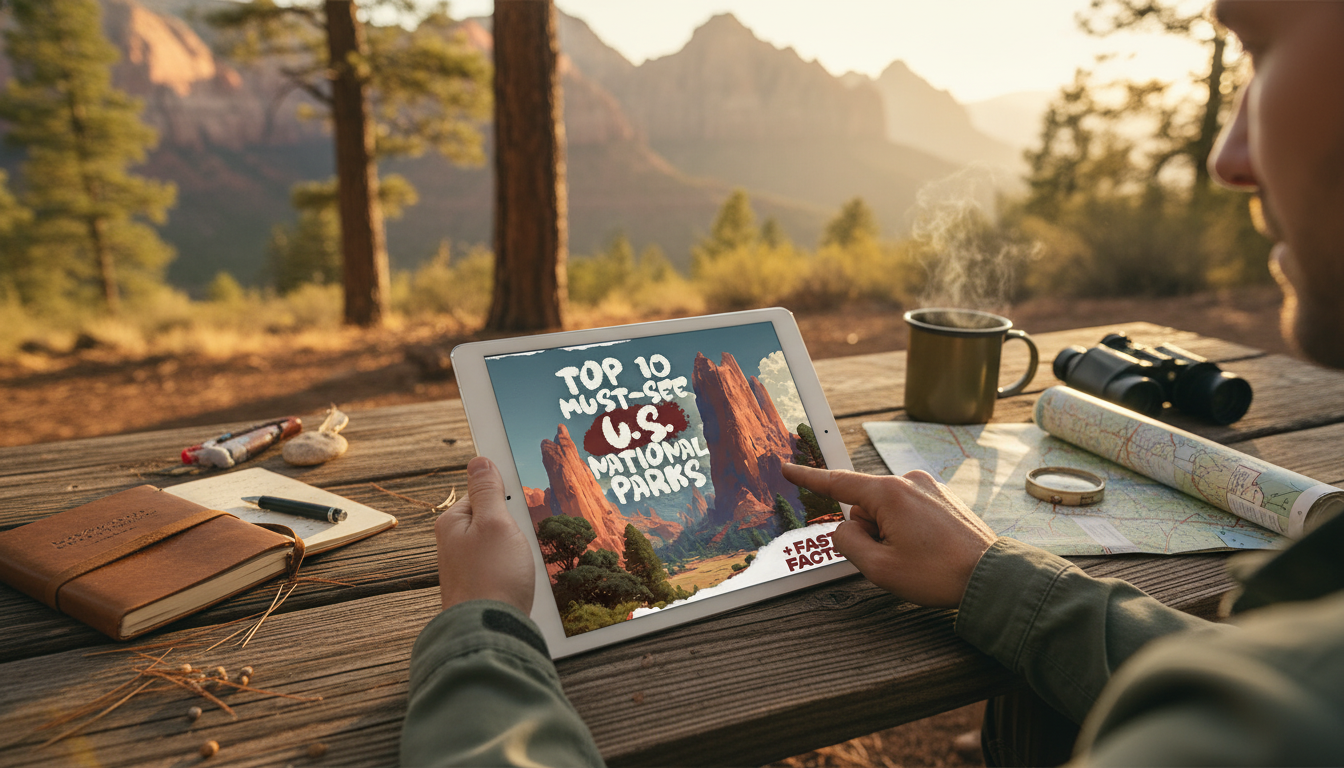
Top 10 Must-See U.S. National Parks + Fast Facts: A Digital Travel Guide for Nature Lovers, Hikers & Adventure Planners
Some national parks take years of repeat visits to fully understand. Others deliver that instant “how is this real?” feeling the moment you step out of the car. This digital travel guide is built for travelers who want the biggest scenery payoff, plus quick, practical details that help turn a saved photo into an actual route—complete with the right season, the right expectations, and a plan that doesn’t collapse when parking fills up.
What this digital travel guide helps solve
- Cuts through overwhelm by focusing on 10 iconic parks with high-impact scenery and signature experiences.
- Provides fast facts so it’s easier to compare parks by region, seasons, and planning considerations.
- Supports different trip styles: road trips, weekend hiking getaways, family-friendly sightseeing, and adventure-forward itineraries.
- Works for early-stage decisions (which parks to choose) and last-mile prep (what to prioritize once you arrive).
Who it’s for (and how it’s used)
- Nature lovers who want scenery-first picks without spending hours researching.
- Hikers comparing parks for trail variety, elevation, and seasonal access.
- Adventure planners coordinating multi-park routes, lodging windows, and timed-entry considerations.
- A thoughtful, giftable option for travelers who prefer a curated shortlist and quick-reference notes.
- Easy to use on phones/tablets for on-the-go decisions—bookmark key pages and keep your trip moving.
Top 10 must-see parks: fast-facts snapshot
Use the snapshot below to shortlist parks based on geography and the type of landscape that matches the trip mood. Before locking anything in, confirm current conditions—road closures, trail status, seasonal access, and alerts—on the official National Park Service site.
| Park | Region | Best for | Typical sweet spot |
|---|---|---|---|
| Yellowstone | Wyoming/Montana/Idaho | Geysers, wildlife, big loop drives | Late spring to early fall |
| Yosemite | California | Granite cliffs, waterfalls, classic hikes | Spring waterfalls; fall shoulder season |
| Grand Canyon | Arizona | Rim viewpoints, sunrise/sunset, rim-to-rim dreams | Spring and fall |
| Zion | Utah | Canyon hikes, narrows-style adventures | Spring and fall |
| Bryce Canyon | Utah | Hoodoos, amphitheater views, stargazing | Late spring to fall; winter for snow contrast |
| Arches | Utah | Natural arches, short hikes, photography | Spring and fall |
| Rocky Mountain | Colorado | Alpine drives, high-elevation trails | Summer to early fall |
| Great Smoky Mountains | Tennessee/North Carolina | Forests, waterfalls, scenic drives | Spring blooms; fall color |
| Glacier | Montana | Glacial valleys, big views, Going-to-the-Sun Road | Mid-summer to early fall |
| Acadia | Maine | Coastal cliffs, carriage roads, sunrise views | Summer to early fall |
For park-by-park highlights you can keep open while mapping a route, see Top 10 Must-See U.S. National Parks + Fast Facts | Digital Travel Guide eBook.
How to plan a national parks trip with less guesswork
- Pick the trip theme first: wildlife viewing, waterfalls, canyon hikes, alpine lakes, desert formations, or coastal scenery. Your theme narrows choices faster than distance alone.
- Choose timing before routes: seasonal roads and snow closures can decide the order of your trip (or whether a park is feasible at all).
- Build a realistic daily rhythm: sunrise viewpoint, mid-day shaded hike, late-day scenic drive, sunset stop. This pattern reduces heat/lighting frustration and makes crowds easier to dodge.
- Plan for permits and peak-time logistics: timed entry, shuttle systems, trailhead quotas, and parking limits can shape each day more than mileage does. Check the National Park Service planning resources before you book nonrefundable stays.
- Avoid itinerary overload: prioritize 1–2 “anchor experiences” per day, then add flexible extras you can drop if weather shifts.
Hiking, safety, and comfort essentials (that save trips)
- Hydration and heat management: desert parks punish under-packing water. Start hikes early and treat midday as a shade-and-scenic-drive window.
- Altitude awareness: high-elevation parks can turn an “easy” trail into a slog. Build acclimation time and keep day one lighter.
- Wildlife basics: keep safe distances, store food properly, and follow ranger guidance—especially in bear country.
- Navigation readiness: download offline maps, and carry a backup power option for long days.
- Leave No Trace habits: stay on durable surfaces, pack out trash, and respect closures that protect fragile areas. Review the Leave No Trace 7 Principles before you go.
Making the guide work for real itineraries
For official park locations and trip-building inspiration across all units, the National Park Service Find a Park directory is a reliable starting point.
Helpful add-ons for smoother travel planning
- Minimalist Travel Packing Planner | Digital Packing Guide
- Pet Travel Essentials Checklist for Safe Trips | Printable Pet Travel Travel Planner
What to check before heading out
FAQ
Is this guide suitable for first-time national parks travelers?
Yes. It’s built around a curated 10-park shortlist with fast facts for quick comparisons, so first-timers can choose confidently without getting buried in research.
Does it help with choosing the best time of year to visit each park?
Yes. The “typical sweet spot” guidance helps narrow down timing, and it’s best paired with a final check of current conditions and alerts on official park sites before booking.
What device can be used to read a digital travel guide on the go?
A phone, tablet, or laptop all work well. For travel days, bookmarking key sections (or saving for offline access when possible) makes quick decisions easier when service is limited.









Leave a comment