5-Day Dating Confidence Audio Reset (Digital Download)
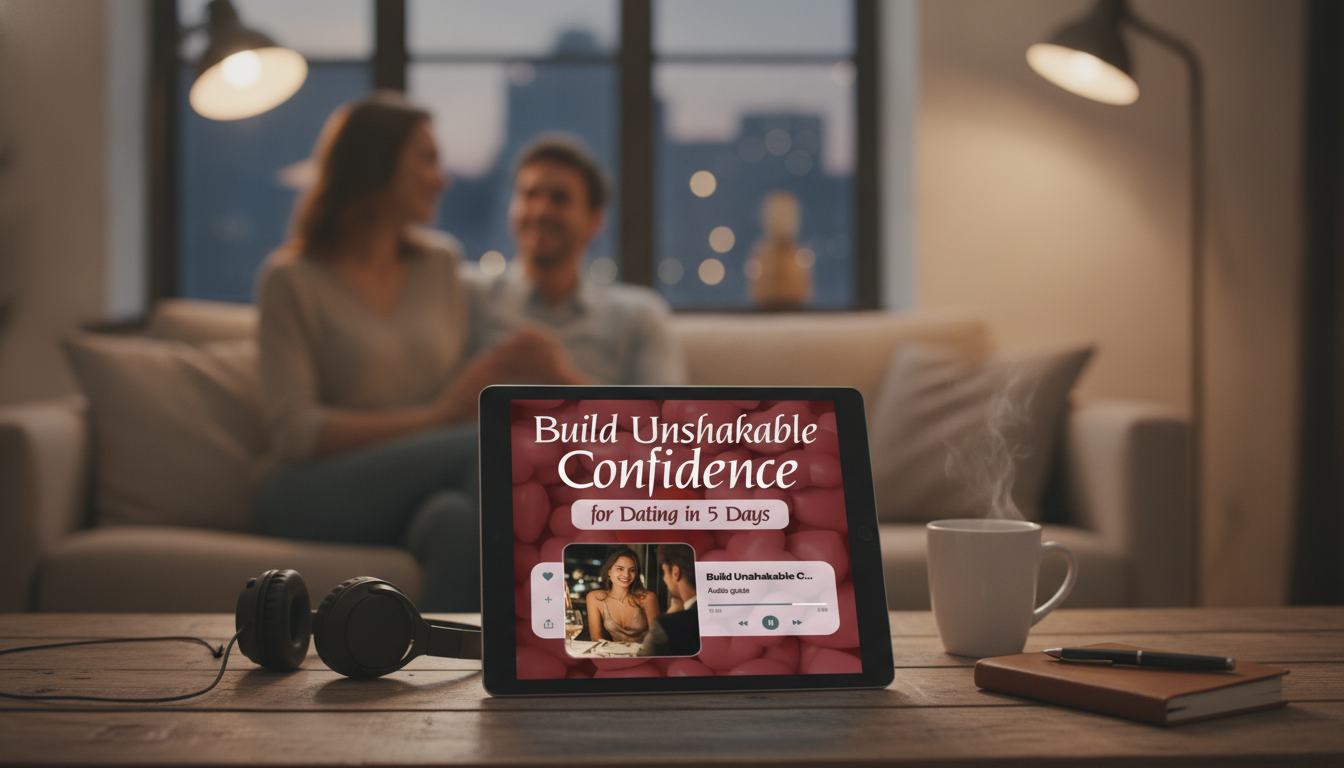
Build Unshakable Confidence for Dating in 5 Days (Audio Program Digital Download)
Dating confidence usually doesn’t fall apart randomly—it tends to break in the same predictable moments: the first hello, the first few minutes of conversation, reading body language, and handling silence or rejection. When your brain treats those moments like a high-stakes test, you can end up overthinking every word, misreading signals, or trying to “perform” instead of connect.
A short, structured plan can help because it replaces vague advice with clear daily steps. This 5-day audio program is designed for real life: listen during a commute or workout, then apply one practical micro-drill the same day so the skill becomes usable fast. If stress shows up, that’s normal—stress changes how the body and mind respond in social situations, which is well-documented by the American Psychological Association.
Who This 5-Day Confidence Reset Helps Most
- People who feel confident in other areas of life but freeze during flirting, first dates, or approaching someone new
- Anyone stuck in “analysis mode” who needs simple drills for body language, eye contact, and conversation flow
- Daters returning after a breakup, long break, or burnout who want a fast, structured restart
- Those who want confidence that feels grounded (calm, direct, respectful), not forced or performative
If social anxiety is part of the picture, confidence training can still help, especially when it emphasizes calm nervous-system regulation and small exposures. For additional context on social anxiety, the National Institute of Mental Health offers a clear overview.
What’s Inside the Audio Program (Digital Download)
- A day-by-day audio structure that focuses on one confidence skill at a time to avoid overwhelm
- Training on posture, voice, and nonverbal signals that communicate ease and self-respect
- Conversation tools for openings, keeping momentum, and transitioning into asking for a date
- Mindset exercises that reduce fear of rejection and shift focus to curiosity and connection
- Practical prompts to turn listening into real-world practice in minutes, not hours
The biggest advantage of audio is repetition: you can re-listen right before a social situation, then run the same short drill until it feels automatic. That’s how “confidence” becomes a behavior—something you do—rather than a mood you hope shows up.
The 5-Day Plan at a Glance
Each day targets one skill so progress is noticeable and measurable. Instead of trying to fix everything at once, you stack small wins: calmer baseline, clearer presence, smoother conversation flow, and a more resilient response to outcomes.
5-Day Confidence Training Map
| Day | Skill Focus | Quick Practice (10–15 minutes) |
|---|---|---|
| 1 | Calm confidence baseline | Breathing + posture reset; set a small daily social goal |
| 2 | Body language & presence | Mirror drill; practice eye contact and relaxed smiling in short interactions |
| 3 | Conversation momentum | Use 3 openers + 3 follow-ups; practice active listening recap |
| 4 | Flirting & clear intent | Deliver a sincere compliment; add playful banter and a clean transition |
| 5 | Integration & resilience | Approach practice; ask for a date; rehearse a calm response to “no” |
Body Language That Reads as Confident (Without Trying Too Hard)
- Start with “neutral strong.” Feet grounded, shoulders relaxed, hands visible, chin level—signals comfort rather than dominance.
- Use eye contact in natural cycles. Look → look away → return. It feels warmer and avoids staring or darting away.
- Slow down micro-movements. Fidgeting, tapping, or rushing speech often communicates anxiety even when your words are solid.
- Match energy, not personality. Lightly mirroring pace and tone helps people feel safe without “copying” them.
- Practice comfortable pauses. A brief silence can signal ease and gives the other person room to lean in.
Presence is less about “big gestures” and more about consistency: steady posture, unhurried responses, and a relaxed face. Perspectives on how posture and presence influence perception have been discussed in professional contexts as well, including at Harvard Business Review.
Conversation Skills That Prevent Awkward Drops
- Use “open, specific, forward” questions. Open-ended, tied to something real, and leading to a story (not just a yes/no).
- Keep a simple loop. Ask → listen → reflect → add a related detail → ask again.
- Swap performance for curiosity. Focus on learning something real rather than trying to impress.
- Use transition lines. Keep three ready: “That reminds me…”, “Speaking of…”, “I’m curious—”.
- Move toward a clear next step. When the vibe is good, suggest a time/place with low pressure.
A practical way to reduce awkwardness is to define “success” as keeping the interaction warm and forward-moving—not delivering perfect lines. When you’re genuinely tracking what they say and reflecting it back, your next question almost writes itself.
Handling Rejection Without Losing Momentum
Digital Download Details and How to Use It
Recommended Digital Products (In Stock)
- Build Unshakable Confidence for Dating in 5 Days | Audio Program | Digital Download | Dating Confidence Training | Body Language & Conversation Skills ($29.99)
- Minimalist Travel Packing Planner | Digital Packing Guide for Light, Smart & Stress-Free Trips ($9.99)
FAQ
How quickly can dating confidence improve with a short audio program?
Confidence can shift surprisingly fast when practice is specific and done daily—many people notice reduced anxiety, steadier body language, and clearer conversation within a week. The biggest gains come from repetition: re-running the drills turns “tips” into automatic habits.
Is this better for beginners or experienced daters?
It works for both. Beginners get structure for openers, body language, and conversation flow, while experienced daters can use it as a reset to sharpen communication and rebuild resilience after a rough stretch.
What if anxiety shows up during a date even after practicing?
Use a quick reset in the moment: slow your breathing, drop your shoulders, and slow your speech slightly. Then return to the simple conversation loop (ask, listen, reflect), since curiosity is one of the fastest ways to exit your head and re-enter the interaction.












Leave a comment