Indoor Cat Enrichment: DIY Toys, Play & Home Setup
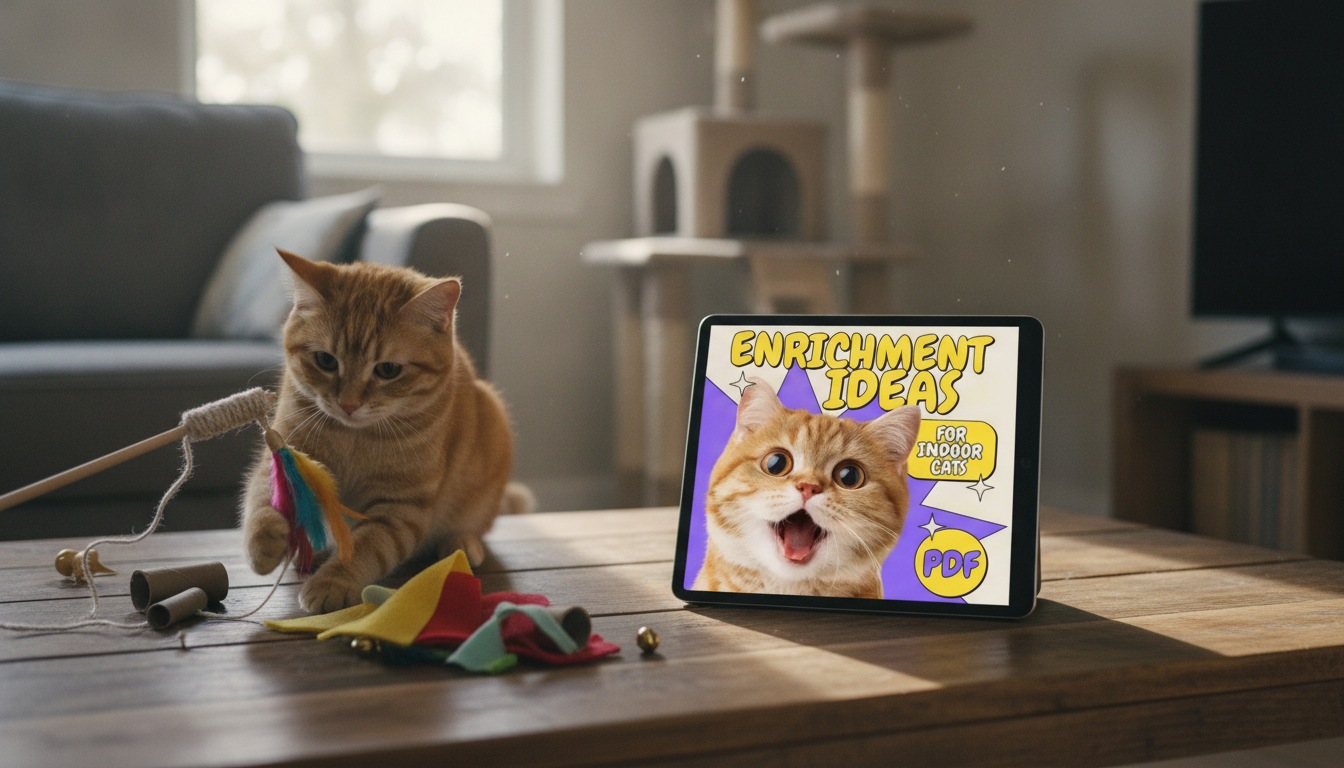
Enrichment Ideas for Indoor Cats: DIY Toys, Play Routines, and Cat-Friendly Home Tips
Indoor cats thrive when their days include hunting-style play, problem-solving, and cozy places to climb, hide, and rest. A few small changes—rotating toys, setting predictable play windows, and designing “cat zones” around the home—can reduce boredom behaviors and help maintain a healthy weight. The ideas below focus on simple, low-cost enrichment that fits busy schedules and small spaces.
Start With Your Cat’s Enrichment “Menu”
Think of enrichment as a rotating menu built from four pillars:
- Hunt/play: movement, chasing, pouncing, and “catching” practice.
- Food puzzles and foraging: tiny challenges that turn meals into an activity.
- Territory: vertical space, lookout points, and safe hiding zones.
- Social/quiet time: gentle attention, grooming, and uninterrupted rest.
Let your cat’s body language guide the plan. Tail flicking, crouching, stalking, and quick re-engagement usually signal the activity is working. Walking away, flattened ears, or panting means it’s time to pause, lower intensity, or end the session. To keep novelty high without constantly buying new items, rotate options every few days and store the “off-duty” toys out of sight.
Daily Play Routines That Feel Like a Hunt
Most indoor cats do better with 2–3 short play sessions (about 5–10 minutes each) rather than one long workout. Finish with a “catch,” then offer a small snack or meal to complete the natural rhythm: stalk → chase → pounce → capture → chew/lick → rest.
- Match energy to the clock: higher-intensity play in the morning and evening; calmer sniff-and-search games midday.
- End on success: let the toy get “caught” so the session feels complete.
- Multi-cat tip: run separate mini-sessions to reduce competition, ambush behavior, and toy guarding.
Sample 7-Day Indoor Cat Enrichment Rotation
| Day | Hunt/Play (5–10 min) | Food/Foraging | Space & Comfort |
|---|---|---|---|
| Mon | Wand toy “mouse” under a blanket | Scatter 10–15 kibbles in a snuffle mat or towel folds | Open a window perch or add a folded blanket to a shelf |
| Tue | Laser only as a warm-up, then end with a physical toy catch | Puzzle feeder or treat ball (easy setting) | Cardboard box “cave” + paper bag (handles removed) |
| Wed | Crinkle ball fetch down a hallway | Hide treats in 3 paper cups | Refresh scratching area with catnip/silvervine |
| Thu | Feather wand up-and-over furniture (vertical jumps) | Lick mat with a small portion of wet food | Add a second resting spot away from foot traffic |
| Fri | Ribbon toy dragged slowly like a snake | DIY “egg carton” treat hunt | Move a cat tree a few inches to create a new view angle |
| Sat | Chase-and-pounce with a stuffed kicker | Scatter feeding across two rooms | Create a high “lookout” using a sturdy shelf + non-slip mat |
| Sun | Quiet “stalk” game behind furniture corners | Freeze-dried treat treasure hunt (very small pieces) | Grooming + calm brushing session in a favorite spot |
DIY Toys From Safe Household Items
Homemade toys can be perfect for short, supervised sessions—especially when you swap them often and toss them as soon as they fray or break.
- Sock kicker: fill a clean sock with fabric scraps, tie a knot, and supervise use. Remove if threads loosen.
- Paper “prey”: crumple kraft paper into a ball. Replace when it gets soggy or torn.
- Towel tunnel: drape a towel over two chairs for an instant ambush zone.
- Cardboard challenge: cut small paw-sized holes in a box; drop toys or a few measured kibbles inside for batting and problem-solving.
Safety checklist: avoid string, yarn, tinsel, rubber bands, hair ties, small plastic pieces, and anything that can be swallowed. When in doubt, supervise closely and discard damaged items immediately.
Food Enrichment That Doesn’t Overfeed
Food puzzles are most helpful when they replace “free calories,” not add to them. Measure your cat’s daily portion and set aside a scoop to use for foraging activities throughout the day.
For deeper guidance on feline environmental needs, see the American Association of Feline Practitioners (AAFP) guidelines and International Cat Care’s enrichment advice.
Cat-Friendly Home Tips: Vertical Space, Scratching, and Rest
More practical home-based enrichment ideas are also listed by the ASPCA.
Enrichment for Different Personalities and Ages
Printable Guide: Turn Ideas Into a Simple Weekly Plan
If you want a ready-to-use plan, this printable includes routines, DIY toy ideas, and an easy weekly rotation: Printable cat enrichment guide with routines and DIY toy ideas.
And if enrichment on the go is part of your routine—vet visits, weekends away, or a move—pair your home plan with a simple packing list: Pet travel essentials checklist for cats and dogs.
FAQ
How much play does an indoor cat need each day?
Many indoor cats do well with about 10–30 minutes total per day, split into 2–3 short sessions. If your cat is relaxed after play, maintains a healthy weight, and isn’t escalating attention-seeking, the amount is likely sufficient; if your cat pants, hides, or gets overstimulated, shorten and calm the sessions.
What are the safest DIY cat toys?
Safe DIY options include crumpled paper balls, cardboard boxes with paw-sized holes, and supervised sock kickers filled with fabric scraps. Avoid string, yarn, rubber bands, hair ties, and small pieces that can be swallowed, and discard any toy that starts to shred or unravel.
How can food puzzles be used without causing weight gain?
Measure your cat’s daily food and use a portion of that same meal for puzzles and treat hunts instead of adding extra calories. Start with easy puzzles, use low-calorie treats sparingly if needed, and monitor body condition so portions can be adjusted over time.










Leave a comment