More Time, Less Stress: Pomodoro + Time Blocking System
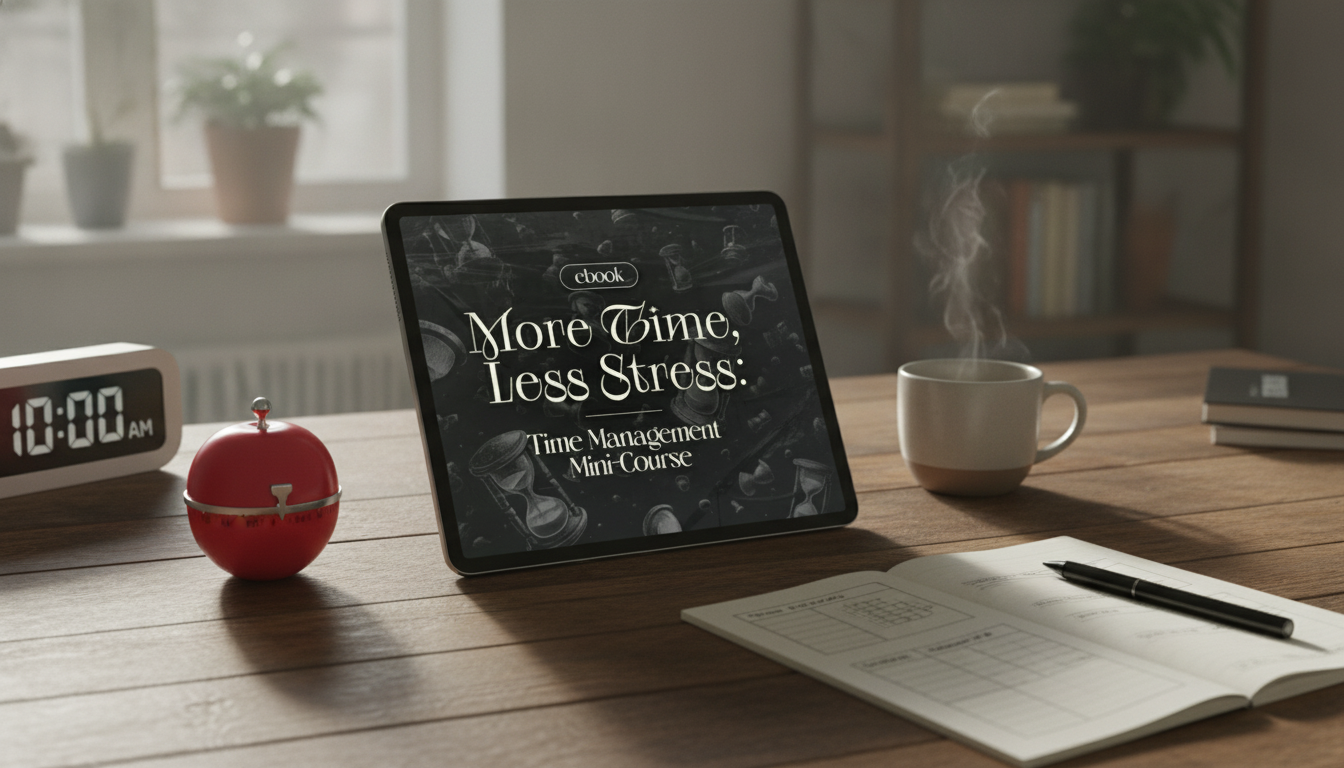
More Time, Less Stress Starts With a Repeatable System
A calmer schedule usually doesn’t come from working harder—it comes from reducing mental load. When decisions live in your head all day (“What should I do next?” “Am I forgetting something?”), even simple tasks feel heavy. A practical time-management system fixes that by giving every day the same simple flow: decide what matters, focus without distractions, schedule realistic blocks, and review so tomorrow starts clean.
The goal isn’t a rigid routine. It’s a lightweight “mini-course” you run daily and weekly—small steps that create steady progress, fewer last-minute scrambles, and more space for what matters.
A simple framework: decide, focus, schedule, review
1) Decide what matters today
Start by naming a small set of outcomes that would make the day successful. Keep it tight: 1–3 important outcomes. If the list is longer, it stops being a priority list and becomes a stress list.
2) Focus without friction
Once you’ve chosen the outcome, protect your attention. Short, structured work intervals make it easier to start (and easier to return after interruptions). This is where Pomodoro-style sprints shine.
3) Schedule the work, not just the goals
A goal without a place on the calendar tends to become “someday.” Convert priorities into time blocks that respect real constraints: meetings, energy dips, family responsibilities, and transition time.
4) Review and reset
End the day with a fast check-in: capture loose ends, move unfinished items into a future block, and choose tomorrow’s first task. That prevents today’s leftovers from hijacking tomorrow morning.
Start with priorities using the Eisenhower Matrix
The Eisenhower Matrix helps you sort tasks by urgency and importance so you stop treating everything like an emergency. It’s also a reminder that “important but not urgent” work is where long-term results live—health, learning, planning, relationships, and deep project progress. For background on Eisenhower’s decision-making legacy, visit the Dwight D. Eisenhower Presidential Library.
| Quadrant | What it often looks like | Best next step |
|---|---|---|
| Urgent + Important | Deadline due today, critical customer issue, urgent family need | Do now; define a finish line; capture a prevention step |
| Important + Not Urgent | Project planning, workouts, deep work, career development | Time block; set a tiny next action; protect the block |
| Urgent + Not Important | Many emails, meeting requests, quick favors | Delegate, template, batch, or say no |
| Not Urgent + Not Important | Endless scrolling, low-value busywork | Delete, limit with rules, or keep as intentional leisure |
Practical rule: choose 1–3 “Important” outcomes for today, then schedule them before you touch lower-value urgent tasks. If something truly is urgent and important, handle it first—but ask what caused it and what safeguard prevents the repeat.
Use Pomodoro to build momentum and reduce overwhelm
Pomodoro is simple: pick one task, work in a short focused sprint, then take a short break. The benefit is psychological as much as practical—the timer turns a vague task into a manageable “start now” moment. Learn the original method details at the official Pomodoro Technique site.
Make the task measurable before the timer starts
“Work on project” is hard to start. “Draft the outline,” “write 300 words,” or “finish the first three slides” gives your brain a clear finish line.
Run the sprint
Try 25 minutes focused + 5 minutes break. After four rounds, take a longer break. If 25 minutes feels too long for a high-resistance task, use 15/5. If you’re doing deep work, 50/10 can be better.
Remove obvious distractions upfront
Before you hit start: silence nonessential notifications, close extra tabs, and put your phone out of reach. If an interruption is unavoidable, jot it on a capture note and return to the timer. Research consistently shows that multitasking and task switching carry real cognitive costs; the American Psychological Association has covered how switching impacts focus and performance.
Turn priorities into reality with time blocking
Time blocking is where priorities become real. Instead of hoping you’ll “find time,” you decide when the work happens, then defend that space like an appointment.
Block around energy, not just availability
Put demanding tasks when your focus is naturally strongest (often earlier in the day). Use lower-energy windows for admin, errands, approvals, and easier communications.
Add buffers and batch similar work
Make blocks outcome-based
| Time | Block | Goal |
|---|---|---|
| 8:30–9:00 | Setup + quick plan | Choose top 3 outcomes; confirm meetings; prep materials |
| 9:00–10:30 | Deep work block | 2–3 Pomodoros on the most important task |
| 10:30–11:00 | Admin batch | Email/messages triage; schedule follow-ups |
| 11:00–12:00 | Meetings or execution | One defined deliverable |
| 1:00–2:00 | Project work | Progress on important-not-urgent item |
| 2:00–2:30 | Buffer | Overflow, quick tasks, transitions |
| 2:30–3:30 | Shallow work batch | Calls, approvals, small edits |
| 3:30–3:45 | Daily review | Capture wins; move tasks; set tomorrow’s first block |
A weekly reset that prevents the pile-up
Common obstacles and quick fixes
A guided mini-course option for building the habit
More Time, Less Stress: Time Management Mini-Course – Productivity Ebook with Pomodoro, Eisenhower Matrix & Time Blocking Strategies is a practical option designed around repeatable checklists, prompts, and planning workflows.
- The Empowered Budgeting Toolkit | 4-in-1 Bundle| Budget Planner & Excel Guide| Monthly Expense Savings, Wealth Strategies & Guided Affirmations for Wealth for planning recurring expenses and reducing financial “surprise tasks.”
- Minimalist Travel Packing Planner | Digital Packing Guide for Light, Smart & Stress-Free Trips to streamline travel prep with less last-minute scrambling.
FAQ
How to more in less time?
Clarify the one outcome that matters most, cut or delegate low-value tasks, work in focused intervals (Pomodoro), and schedule priority work with time blocks and buffers to reduce context switching and last-minute scrambling.











Leave a comment