Zero-Waste Travel Checklist: Pack Light, Waste Less

Eco-Friendly Traveler Checklist: A Zero-Waste Packing Plan and Green Travel Guide
Sustainable travel starts with a few smart choices made before leaving home. A practical checklist helps reduce waste, pack lighter, and avoid last-minute purchases that create extra packaging and emissions. Use the sections below to plan a low-impact trip—from reusable essentials and toiletries to transit habits and responsible souvenirs—then save a copy as a repeatable routine for every destination.
What “eco-friendly travel” looks like in practice
- Reduce waste first: refuse single-use items, replace them with reusables, then recycle/compost where programs exist (a helpful baseline is the U.S. EPA’s guidance on Reduce, Reuse, Recycle).
- Pack to prevent purchases: many “emergency buys” (plastic water bottles, travel-size toiletries, disposable cutlery) become the biggest waste generators.
- Choose lower-impact options when possible: fewer flights, more direct routes, public transit, and eco-certified stays can reduce emissions and local strain (UNEP’s overview of Sustainable Tourism is a solid reference point).
- Respect ecosystems and communities: follow local rules, stay on trails, and keep wildlife wild—aligned with Leave No Trace’s 7 Principles.
The reusable core kit (build once, use for years)
The fastest path to low-waste travel is a “core kit” that lives in a small pouch between trips. Once it’s built, packing becomes mostly a quick refill-and-go routine.
- Hydration: refillable bottle (insulated helps), plus an optional compact water filter for destinations with limited safe refills.
- Food on the go: reusable utensils, a lightweight container, an optional straw, and a cloth napkin or bandana.
- Bags and storage: packable tote, produce bags, a snack zip pouch, and a small dry bag for wet items.
- Waste control: a tiny “trash pouch” for when bins aren’t available; optionally a mini container for compost scraps where appropriate.
- Comfort swaps that reduce waste: reusable handkerchief, menstrual cup/disc or period underwear, and a rechargeable lighter for campers (where permitted).
Reusable essentials checklist (copy/paste into notes)
| Category | Item | Why it helps | Packing tip |
|---|---|---|---|
| Hydration | Refillable water bottle | Avoids single-use bottles | Clip to daypack with a carabiner |
| Food | Utensil set + straw (optional) | Skips disposable cutlery | Store in a washable pouch |
| Food | Reusable container | Reduces takeaway packaging | Choose leak-resistant, lightweight |
| Bags | Packable tote + produce bags | Replaces plastic bags | Keep one tote in a jacket pocket |
| Hygiene | Handkerchief/cloth wipes | Reduces tissues/wet wipes | Carry 1 clean, 1 used zip pouch |
| Waste | Mini trash pouch | Prevents litter when bins are scarce | Empty daily; rinse as needed |
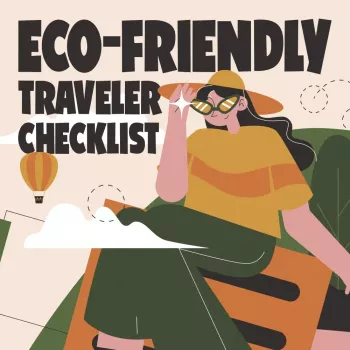
If having everything organized in one place makes packing easier, the Eco-Friendly Traveler Checklist (digital download) is a quick way to keep your reusable kit, toiletries, and day-to-day habits in a single repeatable plan.
Low-waste toiletries and bathroom swaps (without sacrificing comfort)
- Go solid when possible: shampoo/conditioner bars, bar soap, and solid lotion can cut plastic and usually pass carry-on rules more easily than liquids.
- Refill and decant: use small refillable bottles/jars for skincare and label them clearly to avoid spills and “mystery product” waste.
- Dental and shaving: bamboo toothbrush (or keep using an electric head until it’s worn out), toothpaste tabs, and a safety razor or refillable razor system.
- Sunscreen and insect protection: choose reef-safer options where relevant and pack enough so you’re not forced into buying whatever is available in extra packaging on arrival.
- Laundry on the road: laundry sheets/strips or concentrated detergent in a leakproof container; a small sink stopper and travel line can help you skip hotel plastic laundry bags.
Clothing and gear choices that cut impact
- Pack fewer, wash smarter: a capsule wardrobe reduces weight and overconsumption; quick-dry fabrics make sink washing practical.
- Prioritize versatility: neutral layers, one “nice” outfit, and multipurpose shoes reduce duplicates and decision fatigue.
- Repair over replace: add a mini repair kit (needle/thread, a few safety pins, a small patch) to extend the life of what you already own.
- Borrow or rent destination-specific items: renting skis, baby gear, or specialty equipment can be lighter, cheaper, and less wasteful than buying new.
- Avoid “just in case” clutter: overpacking often leads to heavier transit emissions and more unused items.
For travelers who prefer a streamlined wardrobe plan, the Minimalist Travel Packing Planner helps keep outfits and essentials intentional—especially for longer trips where laundry is part of the strategy.
Transit and daily habits that keep waste low
- Keep reusables in your daypack: bottle, tote, and utensils cover most single-use moments (coffee runs, markets, takeout, transit snacks).
- Choose low-impact mobility: walk, bike, public transit, and shared rides when safe and practical.
- Skip hotel disposables: decline daily housekeeping when appropriate, reuse towels, and avoid mini toiletries by bringing your own.
- Go digital-first: store tickets and reservations on your phone; download maps for offline use to reduce paper printouts.
- Eat with less waste: try seasonal/local foods, order realistic portions, and use your container for leftovers.
Responsible souvenirs and ethical shopping
Printable and digital checklist workflow (fast planning, less stress)
Traveling with pets adds a few extra “must-haves.” The Pet Travel Essentials Checklist for Safe Trips helps keep their gear organized so you’re less likely to buy emergency items in single-use packaging on the road.
FAQ
What is an eco-friendly traveler?
An eco-friendly traveler reduces waste and emissions through mindful packing, lower-impact transportation and lodging choices, and respectful behavior that supports local communities. Reusables, “leave no trace” habits, and thoughtful shopping help keep destinations healthier and more resilient.










Leave a comment